
 Image 1 of 1
Tomato Plants
Tomato Seedlings
Choosing Seedlings
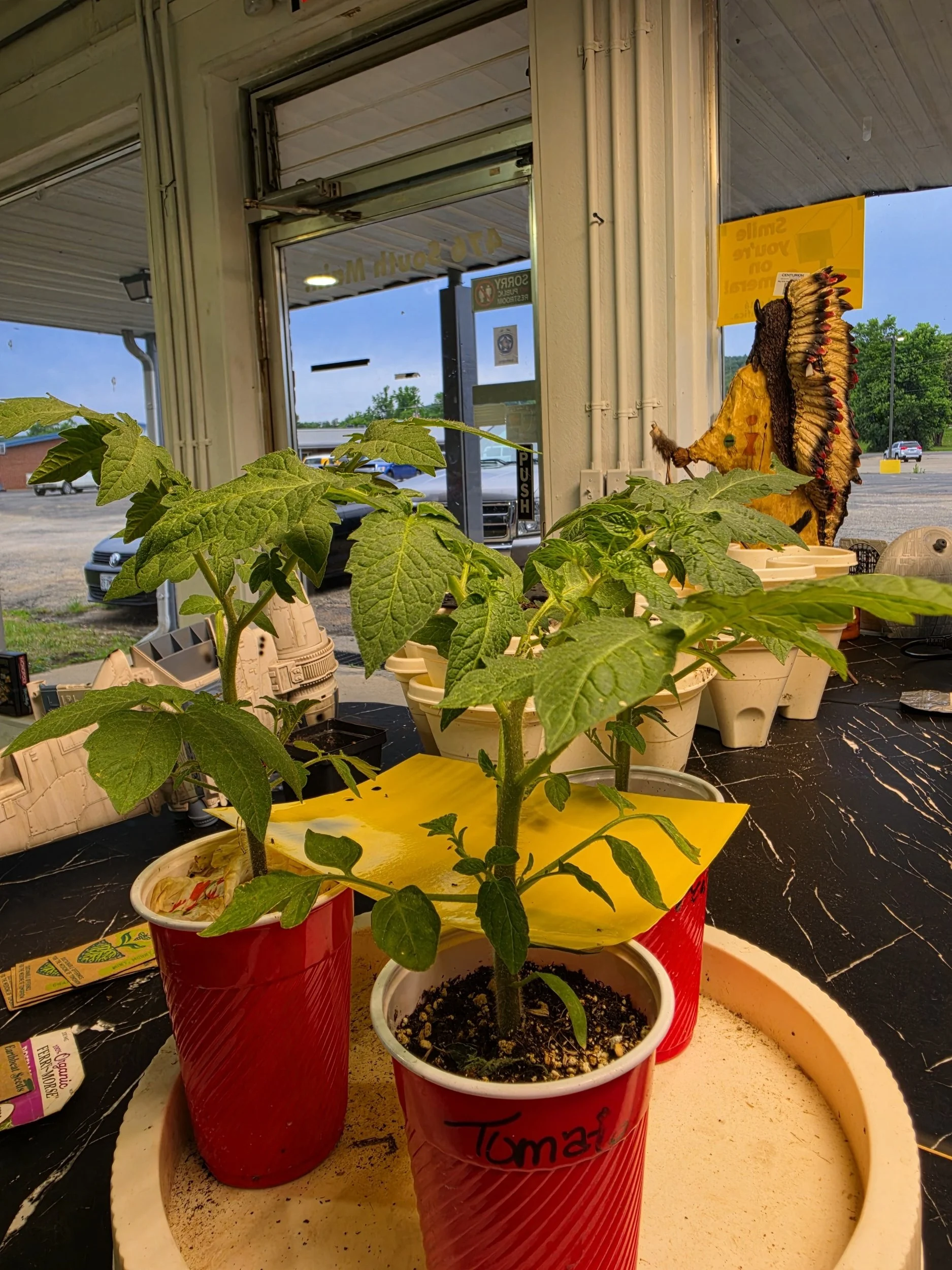
Buy healthy, stocky seedlings with dark green leaves and no yellowing or spots.
Stems should be thick and sturdy, not spindly. A slight fuzz or hair on the stem is normal.
Avoid plants that are flowering already — young plants focus energy on roots and leaves, not fruit.
Potting Up and Planting
Harden off seedlings for 7–10 days before moving outdoors: start with a few hours in shade and gradually increase sun and time.
Plant deeply: bury stems up to the first true leaves. Tomatoes grow roots along buried stems, producing stronger plants.
Spacing: determinate varieties — 18–24 inches apart; indeterminate — 24–36 inches.
Use a well-draining, nutrient-rich potting mix or garden soil amended with compost.
Containers
Minimum container size: 5 gallons for compact determinate types; 10–20+ gallons for indeterminate varieties.
Ensure good drainage holes. Use a high-quality potting mix and avoid garden soil alone in pots.
Support: add a cage, stake, or trellis at planting time to avoid disturbing roots later.
Watering
Keep soil evenly moist but not waterlogged. Water at the base; avoid wetting foliage to reduce disease risk.
Mulch with straw, shredded leaves, or wood chips to conserve moisture and suppress weeds.
Deep, infrequent watering promotes stronger roots; aim for 1–2 inches of water per week, more in hot dry spells.
Feeding
Start with a balanced fertilizer at planting (e.g., 5-10-5). After fruit sets, switch to a fertilizer higher in phosphorus and potassium or a tomato-specific fertilizer.
Avoid excessive nitrogen, which yields lush foliage at the expense of fruit.
Sun and Temperature
Tomatoes need full sun: at least 6–8 hours daily; 8+ is ideal for best yields.
Ideal daytime temperatures: 70–85°F; nighttime: above 55°F. Protect from late frosts.
Common Issues
Leggy seedlings: caused by insufficient light. Provide stronger light or move seedlings closer to a sunny window/under grow lights.
Blossom end rot: calcium deficiency from inconsistent watering. Keep moisture steady and add crushed eggshells or calcium if persistent.
Yellow leaves: overwatering, nutrient deficiency, or disease. Check soil moisture and roots.
Early blight and fungal diseases: provide good airflow, avoid overhead watering, remove affected leaves.
Transplant Timing
Transplant outside after the last expected frost and when soil has warmed. If overnight temps drop below 50°F, protect plants with cloches or row covers.
Pruning and Training
Indeterminate varieties benefit from pruning suckers (the shoots that form in leaf axils) to improve airflow and concentrate energy on main stems.
Determinate varieties generally should not be heavily pruned; they produce a set crop.
Variety Notes
Determinate (bush) — good for containers and canning; fruit ripens in a short window.
Indeterminate (vine) — produce all season; require staking/caging and larger containers.
Quick Checklist for Planting Day
Hardened-off seedlings
Hole deep enough to bury stem
Compost-amended soil or potting mix
Support ready (cage/stake)
Mulch and water supply on hand
Happy growing — tomato seedlings are forgiving, vigorous, and rewarding. Give them strong light, steady water, good support, and a little patience, and you'll be rewarded with a summer full of juicy tomatoes.
Tomato Seedlings
Choosing Seedlings
Buy healthy, stocky seedlings with dark green leaves and no yellowing or spots.
Stems should be thick and sturdy, not spindly. A slight fuzz or hair on the stem is normal.
Avoid plants that are flowering already — young plants focus energy on roots and leaves, not fruit.
Potting Up and Planting
Harden off seedlings for 7–10 days before moving outdoors: start with a few hours in shade and gradually increase sun and time.
Plant deeply: bury stems up to the first true leaves. Tomatoes grow roots along buried stems, producing stronger plants.
Spacing: determinate varieties — 18–24 inches apart; indeterminate — 24–36 inches.
Use a well-draining, nutrient-rich potting mix or garden soil amended with compost.
Containers
Minimum container size: 5 gallons for compact determinate types; 10–20+ gallons for indeterminate varieties.
Ensure good drainage holes. Use a high-quality potting mix and avoid garden soil alone in pots.
Support: add a cage, stake, or trellis at planting time to avoid disturbing roots later.
Watering
Keep soil evenly moist but not waterlogged. Water at the base; avoid wetting foliage to reduce disease risk.
Mulch with straw, shredded leaves, or wood chips to conserve moisture and suppress weeds.
Deep, infrequent watering promotes stronger roots; aim for 1–2 inches of water per week, more in hot dry spells.
Feeding
Start with a balanced fertilizer at planting (e.g., 5-10-5). After fruit sets, switch to a fertilizer higher in phosphorus and potassium or a tomato-specific fertilizer.
Avoid excessive nitrogen, which yields lush foliage at the expense of fruit.
Sun and Temperature
Tomatoes need full sun: at least 6–8 hours daily; 8+ is ideal for best yields.
Ideal daytime temperatures: 70–85°F; nighttime: above 55°F. Protect from late frosts.
Common Issues
Leggy seedlings: caused by insufficient light. Provide stronger light or move seedlings closer to a sunny window/under grow lights.
Blossom end rot: calcium deficiency from inconsistent watering. Keep moisture steady and add crushed eggshells or calcium if persistent.
Yellow leaves: overwatering, nutrient deficiency, or disease. Check soil moisture and roots.
Early blight and fungal diseases: provide good airflow, avoid overhead watering, remove affected leaves.
Transplant Timing
Transplant outside after the last expected frost and when soil has warmed. If overnight temps drop below 50°F, protect plants with cloches or row covers.
Pruning and Training
Indeterminate varieties benefit from pruning suckers (the shoots that form in leaf axils) to improve airflow and concentrate energy on main stems.
Determinate varieties generally should not be heavily pruned; they produce a set crop.
Variety Notes
Determinate (bush) — good for containers and canning; fruit ripens in a short window.
Indeterminate (vine) — produce all season; require staking/caging and larger containers.
Quick Checklist for Planting Day
Hardened-off seedlings
Hole deep enough to bury stem
Compost-amended soil or potting mix
Support ready (cage/stake)
Mulch and water supply on hand
Happy growing — tomato seedlings are forgiving, vigorous, and rewarding. Give them strong light, steady water, good support, and a little patience, and you'll be rewarded with a summer full of juicy tomatoes.