
 Image 1 of 1
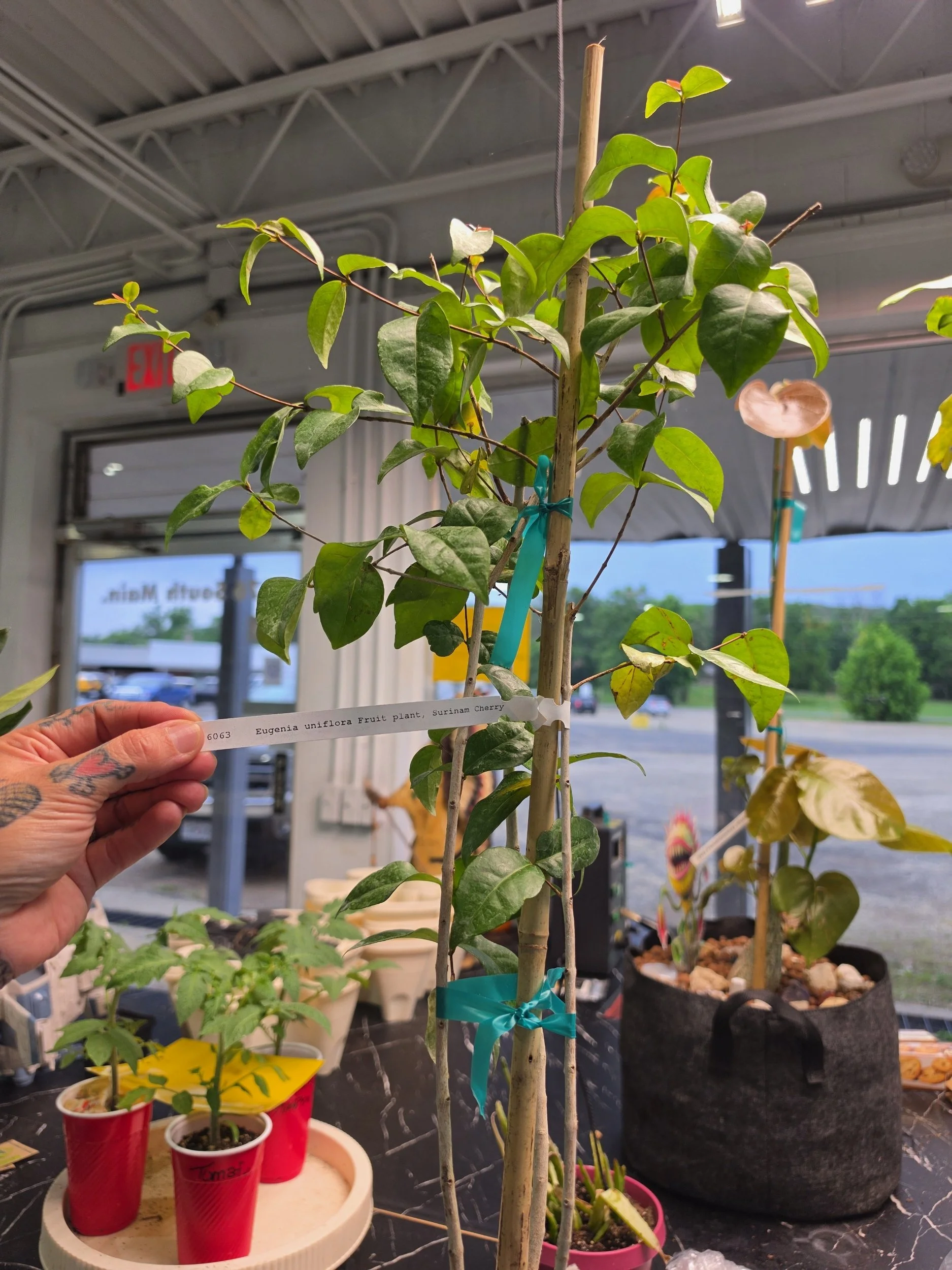
Surinam Cherry Tree
Surinam Cherry (Eugenia uniflora)
Overview
Common names: Surinam cherry, Pitanga, Brazilian cherry
Type: Tropical/subtropical fruit tree or shrub
Size: 6–20 ft (1.8–6 m) as a shrub; can be trained taller in ideal climates
Hardiness: USDA zones 9b–11 (borderline in 10a); sensitive to frost
Origin: South America (Brazil, Uruguay, Paraguay)
Fruit and Flavor
Appearance: Ribbed, pumpkin-shaped fruit, 1–2 in (2.5–5 cm) across; color ranges from deep glossy red to dark maroon or nearly black when fully ripe
Taste: Sweet-tart, aromatic, with resinous, slightly spicy notes. Flavor intensity varies by cultivar and ripeness; fully ripe fruits are sweeter and less astringent
Uses: Fresh eating, jams, jellies, sauces, juices, liqueurs, frozen for smoothies, baked goods
Growing Conditions
Light: Full sun for best fruit production; tolerates light shade but yields decline
Soil: Well-draining soils; tolerates a wide pH range (slightly acidic to slightly alkaline). Performs well in sandy loam and coastal soils
Water: Moderate; regular watering during establishment and fruiting improves size and yield. Tolerant of short dry periods once established
Temperature: Prefers warm, frost-free climates. Frost will damage leaves and fruit and can kill young plants
Wind: Moderately tolerant; avoid planting where strong, drying winds are constant
Planting & Care
Planting: Space 8–15 ft apart for hedging or 15–20 ft apart for specimen trees. Plant in a hole twice the width of the root ball and at the same depth as the nursery container
Fertilizer: Light to moderate feeding. Use a balanced, slow-release fertilizer in spring and mid-summer. Avoid heavy nitrogen that encourages excessive leafy growth at the expense of fruit
Pruning: Responds well to pruning; can be sheared into hedges or shaped as small trees. Prune after fruiting to maintain size, open canopy for light, and remove dead wood
Mulch: Apply organic mulch 2–4 in deep, keeping mulch off the trunk, to conserve moisture and moderate soil temperature
Propagation
From seed: Seeds are viable but seedlings can be variable in fruit quality. Seeds germinate in a few weeks in warm, moist conditions
From cuttings: Semi-hardwood cuttings root reasonably well with rooting hormone; produces true-to-type plants faster than seed
Grafting/air-layering: Used to propagate specific cultivars and speed fruiting
Pests & Diseases
Pests: Fruit flies can infest ripe fruit; scale and aphids may appear. Birds love the fruit—expect losses without netting or deterrents
Diseases: Generally hardy but can suffer from root rot in poorly drained soils and occasional leaf spots in humid conditions
Management: Good cultural practices—proper spacing, sanitation (remove dropped fruit), and monitoring—help prevent major problems. Netting for birds and baiting/trapping for fruit flies may be necessary in some areas
Cultivars & Selection Tips
Varieties vary in fruit color (bright red to dark maroon) and sweetness. Some named cultivars are selected for larger size, improved flavor, or reduced ribbing
Choose darker-fruited varieties for sweeter flavor; lighter fruits can be more tart
For ornamental hedges, select vigorous, dense cultivars that tolerate shearing
Harvest & Storage
Harvest: Pick when fruit attains full color and yields slightly to gentle pressure. Unlike many fruits, Surinam cherries do not continue to sweeten much after picking, so harvest at peak ripeness
Storage: Short shelf life; keep refrigerated for up to 1 week. For longer storage, freeze whole or puréed for later use
Landscape Uses
Ornamental hedge or dense screen, wildlife-attracting shrub, container specimen for patios in warm climates
Good for edible landscapes where small fruiting hedges or edible privacy screens are desired
Notes & Cautions
Seeds contain compounds that may be irritating if chewed extensively—don’t feed large quantities of whole fruit with seeds to pets
Flavor perception is subjective—some people adore the unique resinous-sweet taste, others find it unusual
Want help selecting cultivars or building a planting plan for your yard or orchard? We can recommend varieties and spacing tailored to your climate and goals.
Surinam Cherry (Eugenia uniflora)
Overview
Common names: Surinam cherry, Pitanga, Brazilian cherry
Type: Tropical/subtropical fruit tree or shrub
Size: 6–20 ft (1.8–6 m) as a shrub; can be trained taller in ideal climates
Hardiness: USDA zones 9b–11 (borderline in 10a); sensitive to frost
Origin: South America (Brazil, Uruguay, Paraguay)
Fruit and Flavor
Appearance: Ribbed, pumpkin-shaped fruit, 1–2 in (2.5–5 cm) across; color ranges from deep glossy red to dark maroon or nearly black when fully ripe
Taste: Sweet-tart, aromatic, with resinous, slightly spicy notes. Flavor intensity varies by cultivar and ripeness; fully ripe fruits are sweeter and less astringent
Uses: Fresh eating, jams, jellies, sauces, juices, liqueurs, frozen for smoothies, baked goods
Growing Conditions
Light: Full sun for best fruit production; tolerates light shade but yields decline
Soil: Well-draining soils; tolerates a wide pH range (slightly acidic to slightly alkaline). Performs well in sandy loam and coastal soils
Water: Moderate; regular watering during establishment and fruiting improves size and yield. Tolerant of short dry periods once established
Temperature: Prefers warm, frost-free climates. Frost will damage leaves and fruit and can kill young plants
Wind: Moderately tolerant; avoid planting where strong, drying winds are constant
Planting & Care
Planting: Space 8–15 ft apart for hedging or 15–20 ft apart for specimen trees. Plant in a hole twice the width of the root ball and at the same depth as the nursery container
Fertilizer: Light to moderate feeding. Use a balanced, slow-release fertilizer in spring and mid-summer. Avoid heavy nitrogen that encourages excessive leafy growth at the expense of fruit
Pruning: Responds well to pruning; can be sheared into hedges or shaped as small trees. Prune after fruiting to maintain size, open canopy for light, and remove dead wood
Mulch: Apply organic mulch 2–4 in deep, keeping mulch off the trunk, to conserve moisture and moderate soil temperature
Propagation
From seed: Seeds are viable but seedlings can be variable in fruit quality. Seeds germinate in a few weeks in warm, moist conditions
From cuttings: Semi-hardwood cuttings root reasonably well with rooting hormone; produces true-to-type plants faster than seed
Grafting/air-layering: Used to propagate specific cultivars and speed fruiting
Pests & Diseases
Pests: Fruit flies can infest ripe fruit; scale and aphids may appear. Birds love the fruit—expect losses without netting or deterrents
Diseases: Generally hardy but can suffer from root rot in poorly drained soils and occasional leaf spots in humid conditions
Management: Good cultural practices—proper spacing, sanitation (remove dropped fruit), and monitoring—help prevent major problems. Netting for birds and baiting/trapping for fruit flies may be necessary in some areas
Cultivars & Selection Tips
Varieties vary in fruit color (bright red to dark maroon) and sweetness. Some named cultivars are selected for larger size, improved flavor, or reduced ribbing
Choose darker-fruited varieties for sweeter flavor; lighter fruits can be more tart
For ornamental hedges, select vigorous, dense cultivars that tolerate shearing
Harvest & Storage
Harvest: Pick when fruit attains full color and yields slightly to gentle pressure. Unlike many fruits, Surinam cherries do not continue to sweeten much after picking, so harvest at peak ripeness
Storage: Short shelf life; keep refrigerated for up to 1 week. For longer storage, freeze whole or puréed for later use
Landscape Uses
Ornamental hedge or dense screen, wildlife-attracting shrub, container specimen for patios in warm climates
Good for edible landscapes where small fruiting hedges or edible privacy screens are desired
Notes & Cautions
Seeds contain compounds that may be irritating if chewed extensively—don’t feed large quantities of whole fruit with seeds to pets
Flavor perception is subjective—some people adore the unique resinous-sweet taste, others find it unusual
Want help selecting cultivars or building a planting plan for your yard or orchard? We can recommend varieties and spacing tailored to your climate and goals.