
 Image 1 of 1
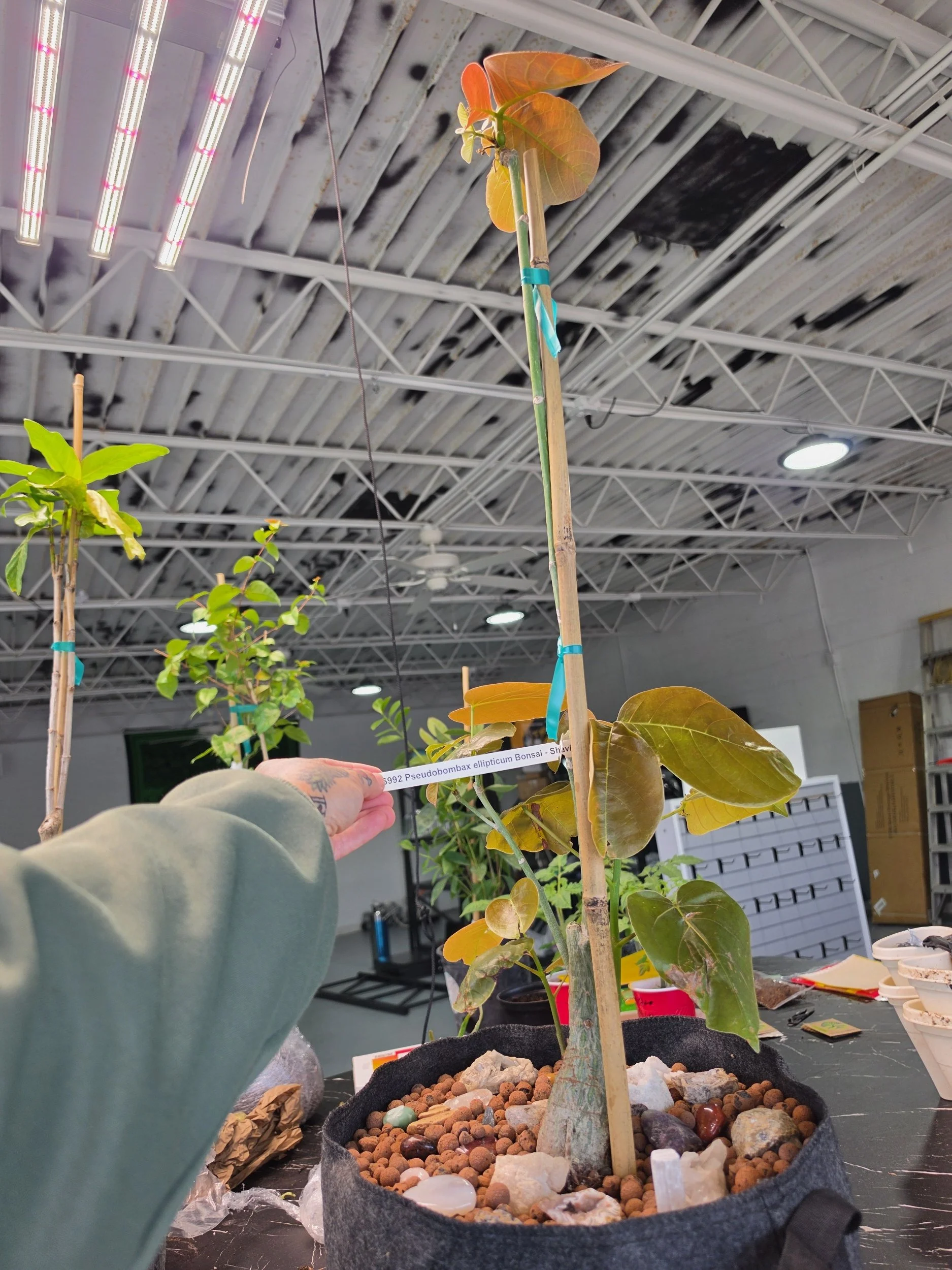
Shaving brush tree, Bonsai
Shaving brush tree — Bonsai
A shaving brush tree (Pseudobombax ellipticum), also called the shaving brush tree or shaving brush bonsai when trained small, is a striking, tropical specimen prized for its dramatic trunk, seasonal showy flowers, and textured, architectural silhouette. It makes a playful, sculptural bonsai subject for indoor collections in warm climates or bright homes.
Quick ID & highlights
Common name: Shaving brush tree
Botanical name: Pseudobombax ellipticum
Family: Malvaceae (formerly Bombacaceae)
Origin: Mexico to Central America
Size (naturally): Medium-sized tree (to ~30–40 ft / 9–12 m)
Bonsai habit: Fast-growing, thick bottle-shaped or swollen trunk, deciduous to semi-deciduous leaves, explosive brush-like pink/white flowers in late winter to spring
Key appeal: Bold trunk, dramatic seasonal flowers, sculptural branching
Growing basics for bonsai
Light: Very bright light. Outdoors in USDA zones ~10–12 is ideal; indoors place in a sunny south- or west-facing window or under strong grow lights. They need several hours of direct light to maintain compact growth and to flower.
Temperature: Tropical-subtropical. Keep above about 50°F (10°C). Protect from frost. Night chills under 55°F (13°C) can cause leaf drop.
Water: Moderate; drought-tolerant once established thanks to water-storing trunk. Water thoroughly when the topsoil begins to dry, but avoid prolonged soggy roots. Allow slight drying between waterings.
Humidity: Appreciates higher humidity but tolerates average indoor levels. Increase humidity with trays or grouping if air is very dry.
Soil: Fast-draining bonsai mix (e.g., akadama/lava/grit or comparable commercial mix) to avoid root rot while letting occasional deep watering penetrate the root zone.
Fertilizer: Feed actively during the growing season (spring–summer) with a balanced fertilizer. Reduce in fall; minimal in winter if semi-dormant.
Pruning & styling
Structural pruning: The species responds well to hard pruning and will back-bud on older wood. Prune in late winter/early spring before active spring flush to shape major branches and encourage ramification.
Maintenance pruning: Pinch new shoots during the growing season to refine pads and shorten internodes. Remove crossing or inward-growing branches to maintain an open canopy.
Wiring: Wood is relatively flexible when young but can be brittle in older, thick branches. Wire in spring during active growth; remove wire before it cuts in. Use caution on the trunk — the natural swollen trunk is a major feature.
Leaf reduction: Pseudobombax has compound leaves; leaf reduction is limited. Repeat pruning can encourage smaller leaves over time but expect medium-sized leaflets on bonsai specimens.
Flowering
Flowers appear on bare wood or at branch tips generally in late winter to spring, often before or with new leaves. Showy, brush-like clusters of pink to white stamens give the common name. To encourage flowering, provide strong light and moderate stress (cooler nights and drier rest period), but avoid frost.
Repotting & root care
Frequency: Young trees annually to every 2 years; mature bonsai every 2–4 years depending on vigor and soil. Repot in spring before new growth begins.
Root pruning: Be fairly bold — the species tolerates root pruning well. Remove circling roots, refresh soil, and keep a balance between root mass and top growth.
Pot choice: Shallow bonsai pots are appropriate once the root system is contained, but allow sufficient volume to support the trunk and seasonal flowering.
Pests & problems
Common pests: Aphids, scale, mealybugs, spider mites. Inspect regularly and treat promptly with horticultural oil, insecticidal soap, or targeted treatments.
Diseases: Root rot from overwatering; crown rot if water collects at base. Good drainage and correct watering prevent most issues.
Leaf drop: Can be triggered by low light, temperature stress, or repotting. Deciduous/semi-deciduous habit means some seasonal leaf loss is normal.
Propagation
Seeds: Produce viable seeds; fresh seeds germinate reliably and give fast growth. Grow seedlings vigorously for future bonsai material.
Cuttings: Semi-hardwood cuttings can root with bottom heat and rooting hormone.
Air-layering: Works for creating larger trunk bases for bonsai starters.
Styling ideas
Informal upright (Moyogi): Show the swelling trunk and taper with balanced secondary branches.
Bunjin/ Literati: If the trunk is tall and contorted, accentuate graceful movement and
Shaving brush tree — Bonsai
A shaving brush tree (Pseudobombax ellipticum), also called the shaving brush tree or shaving brush bonsai when trained small, is a striking, tropical specimen prized for its dramatic trunk, seasonal showy flowers, and textured, architectural silhouette. It makes a playful, sculptural bonsai subject for indoor collections in warm climates or bright homes.
Quick ID & highlights
Common name: Shaving brush tree
Botanical name: Pseudobombax ellipticum
Family: Malvaceae (formerly Bombacaceae)
Origin: Mexico to Central America
Size (naturally): Medium-sized tree (to ~30–40 ft / 9–12 m)
Bonsai habit: Fast-growing, thick bottle-shaped or swollen trunk, deciduous to semi-deciduous leaves, explosive brush-like pink/white flowers in late winter to spring
Key appeal: Bold trunk, dramatic seasonal flowers, sculptural branching
Growing basics for bonsai
Light: Very bright light. Outdoors in USDA zones ~10–12 is ideal; indoors place in a sunny south- or west-facing window or under strong grow lights. They need several hours of direct light to maintain compact growth and to flower.
Temperature: Tropical-subtropical. Keep above about 50°F (10°C). Protect from frost. Night chills under 55°F (13°C) can cause leaf drop.
Water: Moderate; drought-tolerant once established thanks to water-storing trunk. Water thoroughly when the topsoil begins to dry, but avoid prolonged soggy roots. Allow slight drying between waterings.
Humidity: Appreciates higher humidity but tolerates average indoor levels. Increase humidity with trays or grouping if air is very dry.
Soil: Fast-draining bonsai mix (e.g., akadama/lava/grit or comparable commercial mix) to avoid root rot while letting occasional deep watering penetrate the root zone.
Fertilizer: Feed actively during the growing season (spring–summer) with a balanced fertilizer. Reduce in fall; minimal in winter if semi-dormant.
Pruning & styling
Structural pruning: The species responds well to hard pruning and will back-bud on older wood. Prune in late winter/early spring before active spring flush to shape major branches and encourage ramification.
Maintenance pruning: Pinch new shoots during the growing season to refine pads and shorten internodes. Remove crossing or inward-growing branches to maintain an open canopy.
Wiring: Wood is relatively flexible when young but can be brittle in older, thick branches. Wire in spring during active growth; remove wire before it cuts in. Use caution on the trunk — the natural swollen trunk is a major feature.
Leaf reduction: Pseudobombax has compound leaves; leaf reduction is limited. Repeat pruning can encourage smaller leaves over time but expect medium-sized leaflets on bonsai specimens.
Flowering
Flowers appear on bare wood or at branch tips generally in late winter to spring, often before or with new leaves. Showy, brush-like clusters of pink to white stamens give the common name. To encourage flowering, provide strong light and moderate stress (cooler nights and drier rest period), but avoid frost.
Repotting & root care
Frequency: Young trees annually to every 2 years; mature bonsai every 2–4 years depending on vigor and soil. Repot in spring before new growth begins.
Root pruning: Be fairly bold — the species tolerates root pruning well. Remove circling roots, refresh soil, and keep a balance between root mass and top growth.
Pot choice: Shallow bonsai pots are appropriate once the root system is contained, but allow sufficient volume to support the trunk and seasonal flowering.
Pests & problems
Common pests: Aphids, scale, mealybugs, spider mites. Inspect regularly and treat promptly with horticultural oil, insecticidal soap, or targeted treatments.
Diseases: Root rot from overwatering; crown rot if water collects at base. Good drainage and correct watering prevent most issues.
Leaf drop: Can be triggered by low light, temperature stress, or repotting. Deciduous/semi-deciduous habit means some seasonal leaf loss is normal.
Propagation
Seeds: Produce viable seeds; fresh seeds germinate reliably and give fast growth. Grow seedlings vigorously for future bonsai material.
Cuttings: Semi-hardwood cuttings can root with bottom heat and rooting hormone.
Air-layering: Works for creating larger trunk bases for bonsai starters.
Styling ideas
Informal upright (Moyogi): Show the swelling trunk and taper with balanced secondary branches.
Bunjin/ Literati: If the trunk is tall and contorted, accentuate graceful movement and