
 Image 1 of 1
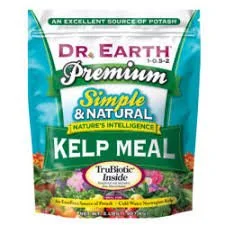
Dr. Earth Kelp Meal
What it is
100% organic kelp meal made from Ascophyllum nodosum (seaweed)
Natural source of micronutrients, trace minerals, and growth hormones
Slow-release powder you can mix into soil or compost
Benefits
Improves root development and overall plant vigor
Supplies natural auxins, cytokinins, and gibberellins (plant growth regulators)
Enhances nutrient uptake and stress tolerance (drought, heat, cold)
Boosts soil microbial activity and helps build soil structure
Safe for vegetables, ornamentals, trees, shrubs, and container plants
How to use
Soil amendment: Work 1–2 lbs per 100 sq ft into the top 2–4 inches of soil before planting.
Vegetable gardens & flower beds: Apply 1–2 tablespoons per plant at planting or mix into planting hole.
Trees & shrubs: Use 1/2–1 lb per inch of trunk diameter, worked into the root zone and watered in.
Containers & potted plants: Use 1 teaspoon per gallon of potting mix when repotting or top-dress around root ball.
Compost: Add 1–2% by volume to compost piles to speed microbial activity and nutrient retention.
Timing: Apply at planting, at season start, or as a periodic top-dress every 4–8 weeks during the growing season.
Application tips
Kelp meal is slow-release; effects build over weeks to months.
Combine with a balanced organic fertilizer for macronutrient needs (N-P-K), since kelp provides mainly micronutrients and growth hormones, not significant N-P-K.
For foliar feeding, use a soluble kelp extract rather than meal.
Store in a cool, dry place in a sealed container to preserve potency.
Safety and environmental notes
Organic and safe to use around children and pets when applied according to directions.
Harvested from seaweed—choose sustainably sourced kelp to reduce environmental impact.
Low salt content compared to liquid kelp products, but avoid overapplication near salt-sensitive plants.
Why gardeners like it
Natural, gentle growth stimulant that plays well with organic systems
Helps plants recover from transplant shock and improves flowering and fruit set
Easy to use and versatile across garden types
Product pairing
Combine with compost, worm castings, and a balanced organic granular fertilizer for complete soil nutrition.
Use alongside microbial inoculants or mycorrhizae to boost root-microbe interactions.
If you want, I can provide a printable application chart for common garden plants (vegetables, annuals, perennials, trees) or a custom recipe for an organic potting mix that includes kelp meal. Which would you prefer?
Dr. Earth Kelp Meal
What it is
100% organic kelp meal made from Ascophyllum nodosum (seaweed)
Natural source of micronutrients, trace minerals, and growth hormones
Slow-release powder you can mix into soil or compost
Benefits
Improves root development and overall plant vigor
Supplies natural auxins, cytokinins, and gibberellins (plant growth regulators)
Enhances nutrient uptake and stress tolerance (drought, heat, cold)
Boosts soil microbial activity and helps build soil structure
Safe for vegetables, ornamentals, trees, shrubs, and container plants
How to use
Soil amendment: Work 1–2 lbs per 100 sq ft into the top 2–4 inches of soil before planting.
Vegetable gardens & flower beds: Apply 1–2 tablespoons per plant at planting or mix into planting hole.
Trees & shrubs: Use 1/2–1 lb per inch of trunk diameter, worked into the root zone and watered in.
Containers & potted plants: Use 1 teaspoon per gallon of potting mix when repotting or top-dress around root ball.
Compost: Add 1–2% by volume to compost piles to speed microbial activity and nutrient retention.
Timing: Apply at planting, at season start, or as a periodic top-dress every 4–8 weeks during the growing season.
Application tips
Kelp meal is slow-release; effects build over weeks to months.
Combine with a balanced organic fertilizer for macronutrient needs (N-P-K), since kelp provides mainly micronutrients and growth hormones, not significant N-P-K.
For foliar feeding, use a soluble kelp extract rather than meal.
Store in a cool, dry place in a sealed container to preserve potency.
Safety and environmental notes
Organic and safe to use around children and pets when applied according to directions.
Harvested from seaweed—choose sustainably sourced kelp to reduce environmental impact.
Low salt content compared to liquid kelp products, but avoid overapplication near salt-sensitive plants.
Why gardeners like it
Natural, gentle growth stimulant that plays well with organic systems
Helps plants recover from transplant shock and improves flowering and fruit set
Easy to use and versatile across garden types
Product pairing
Combine with compost, worm castings, and a balanced organic granular fertilizer for complete soil nutrition.
Use alongside microbial inoculants or mycorrhizae to boost root-microbe interactions.
If you want, I can provide a printable application chart for common garden plants (vegetables, annuals, perennials, trees) or a custom recipe for an organic potting mix that includes kelp meal. Which would you prefer?