
 Image 1 of 1
Hydroton
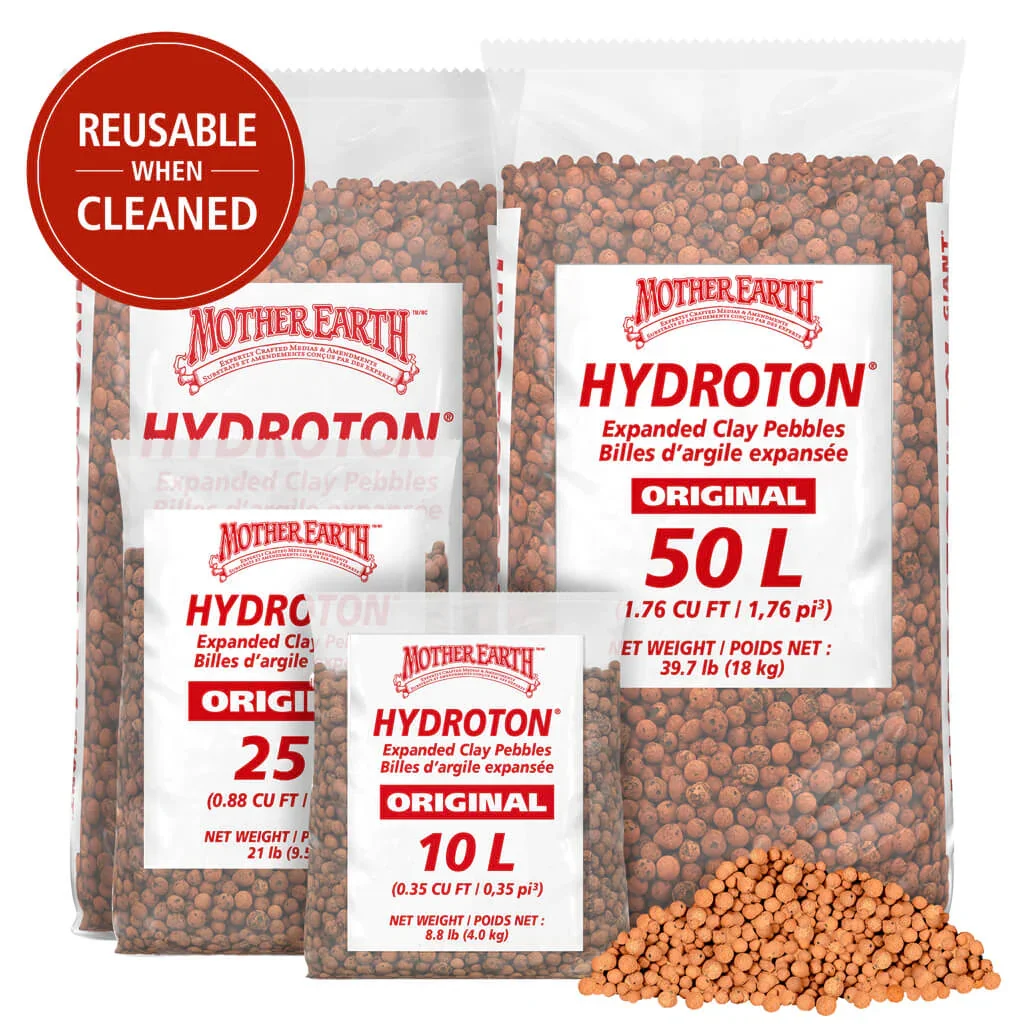
Hydroton (also called expanded clay pebbles or LECA — lightweight expanded clay aggregate) is a lightweight, inert growing medium made by heating clay pellets until they expand and form porous, round pebbles.
Size: typical pebble diameters range from about 4 mm to 16 mm; common gardening sizes are 8–16 mm.
pH neutral and chemically inert: hydroton does not alter nutrient solution pH or contribute nutrients, so growers control feeding entirely through their nutrient solution.
Excellent drainage and aeration: the round shape and porous internal structure create large air pockets, promoting oxygen around roots and reducing the risk of root rot.
Reusable: hydroton can be washed, sterilized, and reused multiple growing cycles. Proper cleaning removes roots, salts, and biofilm.
Good moisture retention balance: pellets hold some water within their internal pores while allowing rapid drainage from the surface, offering a balance between moisture retention and aeration.
Lightweight: significantly lighter than gravel or soil, making it easy to handle and reducing structural load in vertical or mobile systems.
Common in hydroponics and aquaponics: widely used in ebb-and-flow (flood and drain), deep water culture (as a top layer or support), drip systems, and media beds for aquaponics.
Supports root structure: the round shape allows roots to weave through and anchor plants while still allowing easy transplanting.
Low compaction: unlike soil, hydroton does not compact over time, maintaining porosity and oxygen flow to roots.
Thermal insulation: pellets buffer roots somewhat from rapid temperature swings, though they still transmit ambient temperatures fairly well.
Salt buildup: because hydroton is porous, soluble salt deposits can accumulate inside pellets; regular flushing and occasional acid or vinegar soaking (followed by thorough rinsing) help remove deposits.
Sterilization methods: can be cleaned with hot water, hydrogen peroxide soak, diluted bleach (followed by extensive rinsing), or baking in an oven at moderate temperatures—choose a method appropriate for your system and safety practices.
Not a nutrient source: because it’s inert, overreliance without monitoring can mask nutrient imbalances; always monitor EC and pH.
Aesthetic and pH-safe top dressing: often used as a clean, attractive surface layer that reduces algae growth on the reservoir and helps retain humidity.
Cost: more expensive upfront than plain gravel, but longevity and reusability often make it cost-effective over multiple grows.
Environmental note: production consumes energy (kiln firing); however, the long lifespan and reusability reduce waste compared with single-use media.
Best practices: rinse thoroughly before first use to remove dust; monitor and flush system regularly to prevent salt buildup; handle pellets gently to avoid breaking them into fines that can clog pumps and drains.
Alternatives: perlite, pumice, coco coir, rockwool, and gravel each have different water-holding and aeration properties — choose based on your system and crop needs.
Hydroton (also called expanded clay pebbles or LECA — lightweight expanded clay aggregate) is a lightweight, inert growing medium made by heating clay pellets until they expand and form porous, round pebbles.
Size: typical pebble diameters range from about 4 mm to 16 mm; common gardening sizes are 8–16 mm.
pH neutral and chemically inert: hydroton does not alter nutrient solution pH or contribute nutrients, so growers control feeding entirely through their nutrient solution.
Excellent drainage and aeration: the round shape and porous internal structure create large air pockets, promoting oxygen around roots and reducing the risk of root rot.
Reusable: hydroton can be washed, sterilized, and reused multiple growing cycles. Proper cleaning removes roots, salts, and biofilm.
Good moisture retention balance: pellets hold some water within their internal pores while allowing rapid drainage from the surface, offering a balance between moisture retention and aeration.
Lightweight: significantly lighter than gravel or soil, making it easy to handle and reducing structural load in vertical or mobile systems.
Common in hydroponics and aquaponics: widely used in ebb-and-flow (flood and drain), deep water culture (as a top layer or support), drip systems, and media beds for aquaponics.
Supports root structure: the round shape allows roots to weave through and anchor plants while still allowing easy transplanting.
Low compaction: unlike soil, hydroton does not compact over time, maintaining porosity and oxygen flow to roots.
Thermal insulation: pellets buffer roots somewhat from rapid temperature swings, though they still transmit ambient temperatures fairly well.
Salt buildup: because hydroton is porous, soluble salt deposits can accumulate inside pellets; regular flushing and occasional acid or vinegar soaking (followed by thorough rinsing) help remove deposits.
Sterilization methods: can be cleaned with hot water, hydrogen peroxide soak, diluted bleach (followed by extensive rinsing), or baking in an oven at moderate temperatures—choose a method appropriate for your system and safety practices.
Not a nutrient source: because it’s inert, overreliance without monitoring can mask nutrient imbalances; always monitor EC and pH.
Aesthetic and pH-safe top dressing: often used as a clean, attractive surface layer that reduces algae growth on the reservoir and helps retain humidity.
Cost: more expensive upfront than plain gravel, but longevity and reusability often make it cost-effective over multiple grows.
Environmental note: production consumes energy (kiln firing); however, the long lifespan and reusability reduce waste compared with single-use media.
Best practices: rinse thoroughly before first use to remove dust; monitor and flush system regularly to prevent salt buildup; handle pellets gently to avoid breaking them into fines that can clog pumps and drains.
Alternatives: perlite, pumice, coco coir, rockwool, and gravel each have different water-holding and aeration properties — choose based on your system and crop needs.