
 Image 1 of 1
Noni Tree
Noni Tree (Morinda citrifolia)
Quick facts
Common names: Noni, Indian mulberry, cheese fruit
Scientific name: Morinda citrifolia
Family: Rubiaceae
Origin: Southeast Asia and Australasia
Mature size: 10–20 ft (3–6 m) typically; can reach taller in ideal tropical conditions
Hardiness: USDA zones 10–11 (tender; can be grown containerized and brought indoors in cooler zones)
Light: Full sun to partial shade
Soil: Well-drained, tolerant of a wide range (sandy to loamy), prefers slightly acidic to neutral pH
Water: Moderate; drought-tolerant once established but fruits best with regular moisture
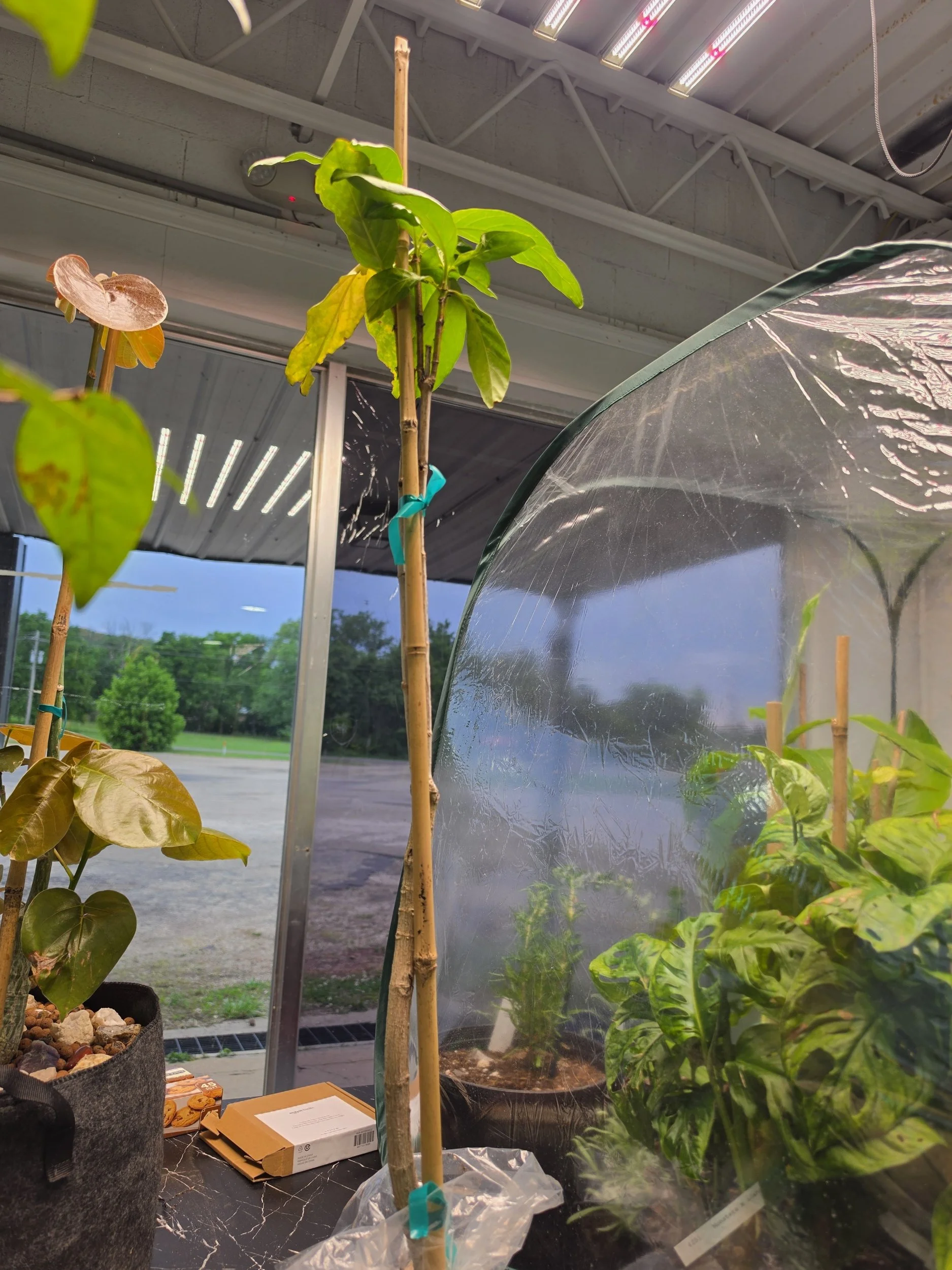
Growth habit: Upright, branching shrub to small tree; glossy evergreen leaves; fragrant tubular white flowers; bumpy, yellowish fruit
Why growers love it
Fast-growing and forgiving — great for impatient gardeners.
Attractive foliage and scented flowers add ornamental value.
Edible fruit used traditionally in juices, fermented drinks, and folk remedies.
Tolerant of poor soils, salt spray (coastal-friendly), and periodic drought.
Planting & care
Light: Plant where it receives a minimum of 6 hours of sun for best fruit set. Tolerates partial shade but fruiting declines.
Soil & drainage: Prefers well-drained soil. Improve heavy clay with organic matter and pumice or coarse sand.
Watering: Keep consistently moist during establishment (first year). After established, water deeply during dry spells. Don’t let roots sit in waterlogged soil.
Fertilizer: Feed with a balanced slow-release fertilizer in spring and again mid-season. Organic options (compost, seaweed/kelp) support overall health and fruiting.
Temperature: Sensitive to frost. Move containers indoors or protect trunk if frost threatens. Thrive in warm, humid climates.
Pruning: Light pruning to shape and open canopy for airflow. Remove dead or crossing branches. Prune after fruiting flushes.
Propagation: Easily grown from seeds (fresh seed germinates within 2–8 weeks) or from semi-hardwood cuttings. Seedlings may show variability; cuttings give true-to-parent plants.
Pests & diseases
Generally resilient. Watch for:
Scale and mealybugs — treat with horticultural oil or insecticidal soap.
Root rot in poorly drained soils — prevent by improving drainage.
Occasional leaf spot or fungal issues in very humid, poorly ventilated sites.
Harvest & uses
Fruit: Yellowish, bumpy, pungent-smelling when ripe. Flavor is strong and often described as bitter/earthy; many prefer processing (juicing, fermentation, blending) rather than eating raw.
Culinary: Noni juice
Noni Tree (Morinda citrifolia)
Quick facts
Common names: Noni, Indian mulberry, cheese fruit
Scientific name: Morinda citrifolia
Family: Rubiaceae
Origin: Southeast Asia and Australasia
Mature size: 10–20 ft (3–6 m) typically; can reach taller in ideal tropical conditions
Hardiness: USDA zones 10–11 (tender; can be grown containerized and brought indoors in cooler zones)
Light: Full sun to partial shade
Soil: Well-drained, tolerant of a wide range (sandy to loamy), prefers slightly acidic to neutral pH
Water: Moderate; drought-tolerant once established but fruits best with regular moisture
Growth habit: Upright, branching shrub to small tree; glossy evergreen leaves; fragrant tubular white flowers; bumpy, yellowish fruit
Why growers love it
Fast-growing and forgiving — great for impatient gardeners.
Attractive foliage and scented flowers add ornamental value.
Edible fruit used traditionally in juices, fermented drinks, and folk remedies.
Tolerant of poor soils, salt spray (coastal-friendly), and periodic drought.
Planting & care
Light: Plant where it receives a minimum of 6 hours of sun for best fruit set. Tolerates partial shade but fruiting declines.
Soil & drainage: Prefers well-drained soil. Improve heavy clay with organic matter and pumice or coarse sand.
Watering: Keep consistently moist during establishment (first year). After established, water deeply during dry spells. Don’t let roots sit in waterlogged soil.
Fertilizer: Feed with a balanced slow-release fertilizer in spring and again mid-season. Organic options (compost, seaweed/kelp) support overall health and fruiting.
Temperature: Sensitive to frost. Move containers indoors or protect trunk if frost threatens. Thrive in warm, humid climates.
Pruning: Light pruning to shape and open canopy for airflow. Remove dead or crossing branches. Prune after fruiting flushes.
Propagation: Easily grown from seeds (fresh seed germinates within 2–8 weeks) or from semi-hardwood cuttings. Seedlings may show variability; cuttings give true-to-parent plants.
Pests & diseases
Generally resilient. Watch for:
Scale and mealybugs — treat with horticultural oil or insecticidal soap.
Root rot in poorly drained soils — prevent by improving drainage.
Occasional leaf spot or fungal issues in very humid, poorly ventilated sites.
Harvest & uses
Fruit: Yellowish, bumpy, pungent-smelling when ripe. Flavor is strong and often described as bitter/earthy; many prefer processing (juicing, fermentation, blending) rather than eating raw.
Culinary: Noni juice and preserves are common uses. Often mixed with other fruit juices to mellow flavor.
Traditional & herbal: Used in Polynesian, Southeast Asian, and Indian traditional medicine. Common claims include anti-inflammatory and immune-support properties; scientific evidence is mixed and not conclusive. Always consult a healthcare professional before using medicinally.
Wildlife: Attracts birds and bats that help with seed dispersal.
Container growing
Choose a large, well-draining pot (minimum 15–20 gallons for long-term growth).
Use a high-quality potting mix amended with perlite or pumice.
Provide consistent moisture and feed regularly. Move indoors or to a protected area if temperatures drop near freezing.
Noni Tree (Morinda citrifolia)
Quick facts
Common names: Noni, Indian mulberry, cheese fruit
Scientific name: Morinda citrifolia
Family: Rubiaceae
Origin: Southeast Asia and Australasia
Mature size: 10–20 ft (3–6 m) typically; can reach taller in ideal tropical conditions
Hardiness: USDA zones 10–11 (tender; can be grown containerized and brought indoors in cooler zones)
Light: Full sun to partial shade
Soil: Well-drained, tolerant of a wide range (sandy to loamy), prefers slightly acidic to neutral pH
Water: Moderate; drought-tolerant once established but fruits best with regular moisture
Growth habit: Upright, branching shrub to small tree; glossy evergreen leaves; fragrant tubular white flowers; bumpy, yellowish fruit
Why growers love it
Fast-growing and forgiving — great for impatient gardeners.
Attractive foliage and scented flowers add ornamental value.
Edible fruit used traditionally in juices, fermented drinks, and folk remedies.
Tolerant of poor soils, salt spray (coastal-friendly), and periodic drought.
Planting & care
Light: Plant where it receives a minimum of 6 hours of sun for best fruit set. Tolerates partial shade but fruiting declines.
Soil & drainage: Prefers well-drained soil. Improve heavy clay with organic matter and pumice or coarse sand.
Watering: Keep consistently moist during establishment (first year). After established, water deeply during dry spells. Don’t let roots sit in waterlogged soil.
Fertilizer: Feed with a balanced slow-release fertilizer in spring and again mid-season. Organic options (compost, seaweed/kelp) support overall health and fruiting.
Temperature: Sensitive to frost. Move containers indoors or protect trunk if frost threatens. Thrive in warm, humid climates.
Pruning: Light pruning to shape and open canopy for airflow. Remove dead or crossing branches. Prune after fruiting flushes.
Propagation: Easily grown from seeds (fresh seed germinates within 2–8 weeks) or from semi-hardwood cuttings. Seedlings may show variability; cuttings give true-to-parent plants.
Pests & diseases
Generally resilient. Watch for:
Scale and mealybugs — treat with horticultural oil or insecticidal soap.
Root rot in poorly drained soils — prevent by improving drainage.
Occasional leaf spot or fungal issues in very humid, poorly ventilated sites.
Harvest & uses
Fruit: Yellowish, bumpy, pungent-smelling when ripe. Flavor is strong and often described as bitter/earthy; many prefer processing (juicing, fermentation, blending) rather than eating raw.
Culinary: Noni juice
Noni Tree (Morinda citrifolia)
Quick facts
Common names: Noni, Indian mulberry, cheese fruit
Scientific name: Morinda citrifolia
Family: Rubiaceae
Origin: Southeast Asia and Australasia
Mature size: 10–20 ft (3–6 m) typically; can reach taller in ideal tropical conditions
Hardiness: USDA zones 10–11 (tender; can be grown containerized and brought indoors in cooler zones)
Light: Full sun to partial shade
Soil: Well-drained, tolerant of a wide range (sandy to loamy), prefers slightly acidic to neutral pH
Water: Moderate; drought-tolerant once established but fruits best with regular moisture
Growth habit: Upright, branching shrub to small tree; glossy evergreen leaves; fragrant tubular white flowers; bumpy, yellowish fruit
Why growers love it
Fast-growing and forgiving — great for impatient gardeners.
Attractive foliage and scented flowers add ornamental value.
Edible fruit used traditionally in juices, fermented drinks, and folk remedies.
Tolerant of poor soils, salt spray (coastal-friendly), and periodic drought.
Planting & care
Light: Plant where it receives a minimum of 6 hours of sun for best fruit set. Tolerates partial shade but fruiting declines.
Soil & drainage: Prefers well-drained soil. Improve heavy clay with organic matter and pumice or coarse sand.
Watering: Keep consistently moist during establishment (first year). After established, water deeply during dry spells. Don’t let roots sit in waterlogged soil.
Fertilizer: Feed with a balanced slow-release fertilizer in spring and again mid-season. Organic options (compost, seaweed/kelp) support overall health and fruiting.
Temperature: Sensitive to frost. Move containers indoors or protect trunk if frost threatens. Thrive in warm, humid climates.
Pruning: Light pruning to shape and open canopy for airflow. Remove dead or crossing branches. Prune after fruiting flushes.
Propagation: Easily grown from seeds (fresh seed germinates within 2–8 weeks) or from semi-hardwood cuttings. Seedlings may show variability; cuttings give true-to-parent plants.
Pests & diseases
Generally resilient. Watch for:
Scale and mealybugs — treat with horticultural oil or insecticidal soap.
Root rot in poorly drained soils — prevent by improving drainage.
Occasional leaf spot or fungal issues in very humid, poorly ventilated sites.
Harvest & uses
Fruit: Yellowish, bumpy, pungent-smelling when ripe. Flavor is strong and often described as bitter/earthy; many prefer processing (juicing, fermentation, blending) rather than eating raw.
Culinary: Noni juice and preserves are common uses. Often mixed with other fruit juices to mellow flavor.
Traditional & herbal: Used in Polynesian, Southeast Asian, and Indian traditional medicine. Common claims include anti-inflammatory and immune-support properties; scientific evidence is mixed and not conclusive. Always consult a healthcare professional before using medicinally.
Wildlife: Attracts birds and bats that help with seed dispersal.
Container growing
Choose a large, well-draining pot (minimum 15–20 gallons for long-term growth).
Use a high-quality potting mix amended with perlite or pumice.
Provide consistent moisture and feed regularly. Move indoors or to a protected area if temperatures drop near freezing.