
 Image 1 of 1
Mint
Mint
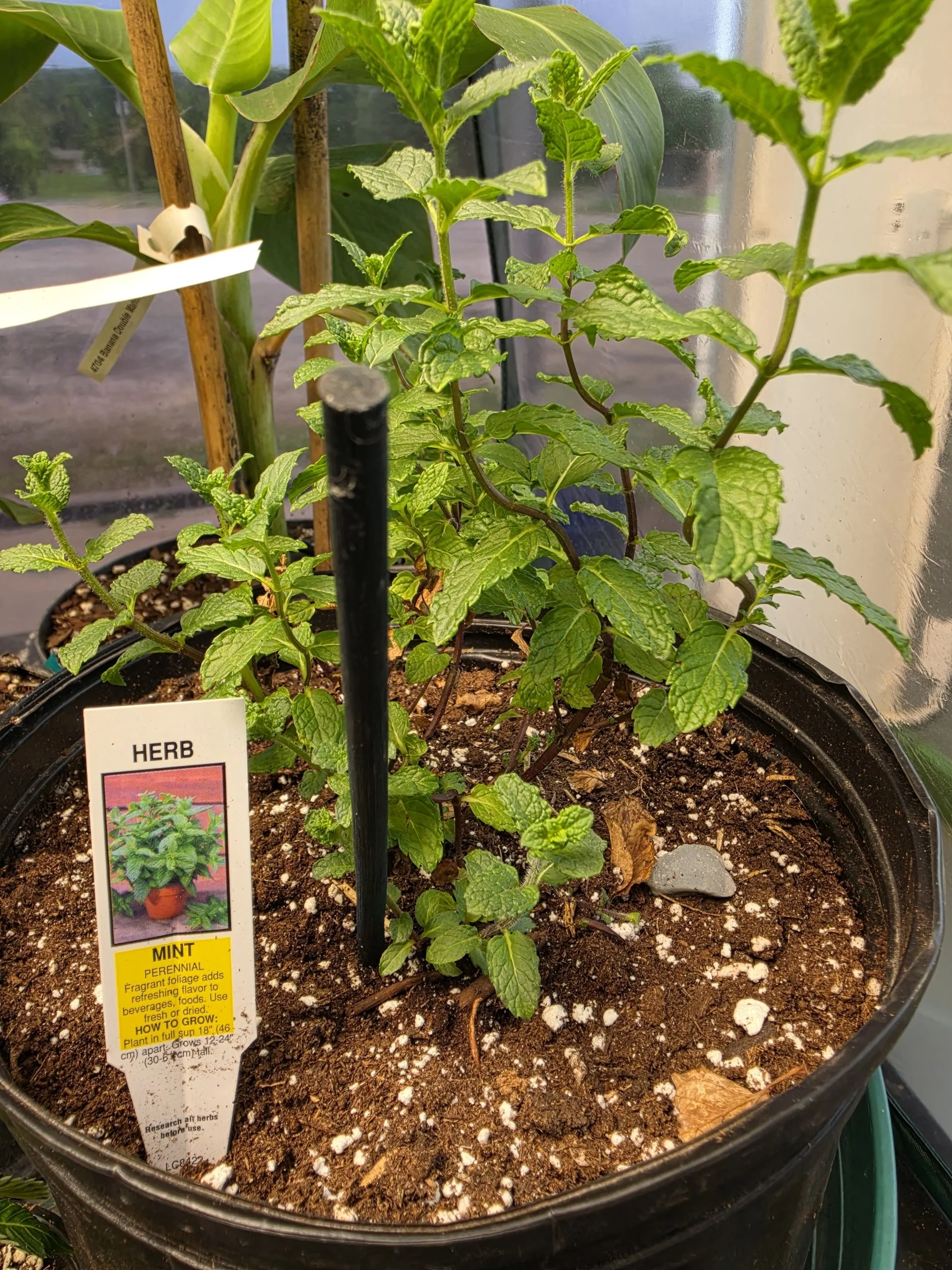
Mint (genus Mentha) is a fast-growing, aromatic herb prized for its bright flavor and versatile uses. Common varieties include spearmint (Mentha spicata), peppermint (Mentha × piperita), chocolate mint, apple mint, and pineapple mint. Mint is a hardy perennial that thrives in many climates and is especially valued in culinary, medicinal, and ornamental applications.
Appearance
Leaves: Opposite, toothed, often bright green; some varieties have variegated or darker foliage.
Stems: Square stems typical of the mint family (Lamiaceae).
Flowers: Small, tubular flowers in spikes or clusters; colors range from white to pink, purple, and lilac.
Size: Most mints reach 1–3 feet tall, with vigorous spreading via underground rhizomes.
Growing Conditions
Light: Prefers full sun to partial shade. In hot climates, afternoon shade helps prevent leaf scorch and keeps flavor stronger.
Soil: Moist, well-draining soil rich in organic matter. pH 6.0–7.0 is ideal.
Water: Regular watering to keep soil consistently moist but not waterlogged. Mint dislikes long dry spells.
Temperature: Grows well in USDA zones 3–11 depending on the variety. Tolerates cool weather but thrives in warm conditions.
Fertilizer: Light feeding with a balanced fertilizer or compost in spring; excess nitrogen can reduce essential oils and weaken flavor.
Planting & Containment
Planting: Start from nursery plants, root divisions, or cuttings. Space 12–18 inches apart to allow airflow.
Containers: Highly recommended because mint spreads aggressively. Use pots or place root barriers when planting in the ground to prevent it from overtaking beds.
Companion planting: Mint can repel pests like ants, flea beetles, and cabbage moths; pair with brassicas, tomatoes, and cabbages, but keep contained to avoid competition.
Care & Maintenance
Pruning: Pinch back regularly to encourage bushy growth and prevent flowering if you want the best leaf flavor. Cut plants to about 2–3 inches above the soil in late summer to promote fall regrowth.
Harvesting: Begin harvesting when plants are actively growing. Snip leaves or stems, ideally in the morning after dew dries for best oil concentration. Frequent harvests stimulate new growth.
Pests & Diseases: Generally resilient. Watch for aphids, spider mites, and mint rust (orange pustules on underside of leaves). Good air circulation and avoiding overhead watering reduce disease risk.
Overwintering: In colder regions, mulch heavily or move containers into a protected area. Mint will generally regrow from root crowns in spring.
Propagation
Stem cuttings: Place 3–4 inch cuttings in water or moist potting mix; roots form quickly.
Division: Dig up and divide clumps in spring or fall.
Seed: Some varieties are sterile or don’t come true from seed; seed-grown plants can be slower and less reliable.
Culinary Uses
Fresh leaves for teas, mojitos, juleps, salads, tabbouleh, yogurt sauces, chutneys, and garnishes.
Dried leaves for teas and spice blends—dry quickly to preserve oils and aroma.
Flavor pairs well with lemon, lamb, chocolate, berries, cucumber, and green vegetables.
Medicinal & Aromatic Uses
Traditional uses include soothing digestion, relieving headaches, and calming nausea.
Essential oils from peppermint (menthol) used in aromatherapy, topical rubs, and as flavoring in confectionery and oral care products.
Troubleshooting
Leggy growth: Pinch tips to encourage bushiness; move to brighter light.
Weak flavor: Harvest at peak oil time (morning after dew dries) and avoid over-fertilizing with nitrogen.
Spreading out of control: Lift and replant in containers or cut back aggressively; install root barriers.
Fun Facts
Peppermint is a natural hybrid between watermint and spearmint.
Mint has been cultivated for thousands of years—ancient Egyptians used it in burial rituals and the Greeks flavored wine with it.
Quick Care Cheat Sheet
Light: Sun to part shade
Water: Consistently moist
Soil: Rich, well-draining
Zones: 3–11 (varies)
Planting: Containers recommended
Harvest: Frequent snips for best flavor
Grow smart, trim often, and let that mint mingle—just not too much, unless you want your garden to smell like a candy factory.
Mint
Mint (genus Mentha) is a fast-growing, aromatic herb prized for its bright flavor and versatile uses. Common varieties include spearmint (Mentha spicata), peppermint (Mentha × piperita), chocolate mint, apple mint, and pineapple mint. Mint is a hardy perennial that thrives in many climates and is especially valued in culinary, medicinal, and ornamental applications.
Appearance
Leaves: Opposite, toothed, often bright green; some varieties have variegated or darker foliage.
Stems: Square stems typical of the mint family (Lamiaceae).
Flowers: Small, tubular flowers in spikes or clusters; colors range from white to pink, purple, and lilac.
Size: Most mints reach 1–3 feet tall, with vigorous spreading via underground rhizomes.
Growing Conditions
Light: Prefers full sun to partial shade. In hot climates, afternoon shade helps prevent leaf scorch and keeps flavor stronger.
Soil: Moist, well-draining soil rich in organic matter. pH 6.0–7.0 is ideal.
Water: Regular watering to keep soil consistently moist but not waterlogged. Mint dislikes long dry spells.
Temperature: Grows well in USDA zones 3–11 depending on the variety. Tolerates cool weather but thrives in warm conditions.
Fertilizer: Light feeding with a balanced fertilizer or compost in spring; excess nitrogen can reduce essential oils and weaken flavor.
Planting & Containment
Planting: Start from nursery plants, root divisions, or cuttings. Space 12–18 inches apart to allow airflow.
Containers: Highly recommended because mint spreads aggressively. Use pots or place root barriers when planting in the ground to prevent it from overtaking beds.
Companion planting: Mint can repel pests like ants, flea beetles, and cabbage moths; pair with brassicas, tomatoes, and cabbages, but keep contained to avoid competition.
Care & Maintenance
Pruning: Pinch back regularly to encourage bushy growth and prevent flowering if you want the best leaf flavor. Cut plants to about 2–3 inches above the soil in late summer to promote fall regrowth.
Harvesting: Begin harvesting when plants are actively growing. Snip leaves or stems, ideally in the morning after dew dries for best oil concentration. Frequent harvests stimulate new growth.
Pests & Diseases: Generally resilient. Watch for aphids, spider mites, and mint rust (orange pustules on underside of leaves). Good air circulation and avoiding overhead watering reduce disease risk.
Overwintering: In colder regions, mulch heavily or move containers into a protected area. Mint will generally regrow from root crowns in spring.
Propagation
Stem cuttings: Place 3–4 inch cuttings in water or moist potting mix; roots form quickly.
Division: Dig up and divide clumps in spring or fall.
Seed: Some varieties are sterile or don’t come true from seed; seed-grown plants can be slower and less reliable.
Culinary Uses
Fresh leaves for teas, mojitos, juleps, salads, tabbouleh, yogurt sauces, chutneys, and garnishes.
Dried leaves for teas and spice blends—dry quickly to preserve oils and aroma.
Flavor pairs well with lemon, lamb, chocolate, berries, cucumber, and green vegetables.
Medicinal & Aromatic Uses
Traditional uses include soothing digestion, relieving headaches, and calming nausea.
Essential oils from peppermint (menthol) used in aromatherapy, topical rubs, and as flavoring in confectionery and oral care products.
Troubleshooting
Leggy growth: Pinch tips to encourage bushiness; move to brighter light.
Weak flavor: Harvest at peak oil time (morning after dew dries) and avoid over-fertilizing with nitrogen.
Spreading out of control: Lift and replant in containers or cut back aggressively; install root barriers.
Fun Facts
Peppermint is a natural hybrid between watermint and spearmint.
Mint has been cultivated for thousands of years—ancient Egyptians used it in burial rituals and the Greeks flavored wine with it.
Quick Care Cheat Sheet
Light: Sun to part shade
Water: Consistently moist
Soil: Rich, well-draining
Zones: 3–11 (varies)
Planting: Containers recommended
Harvest: Frequent snips for best flavor
Grow smart, trim often, and let that mint mingle—just not too much, unless you want your garden to smell like a candy factory.