
 Image 1 of 1
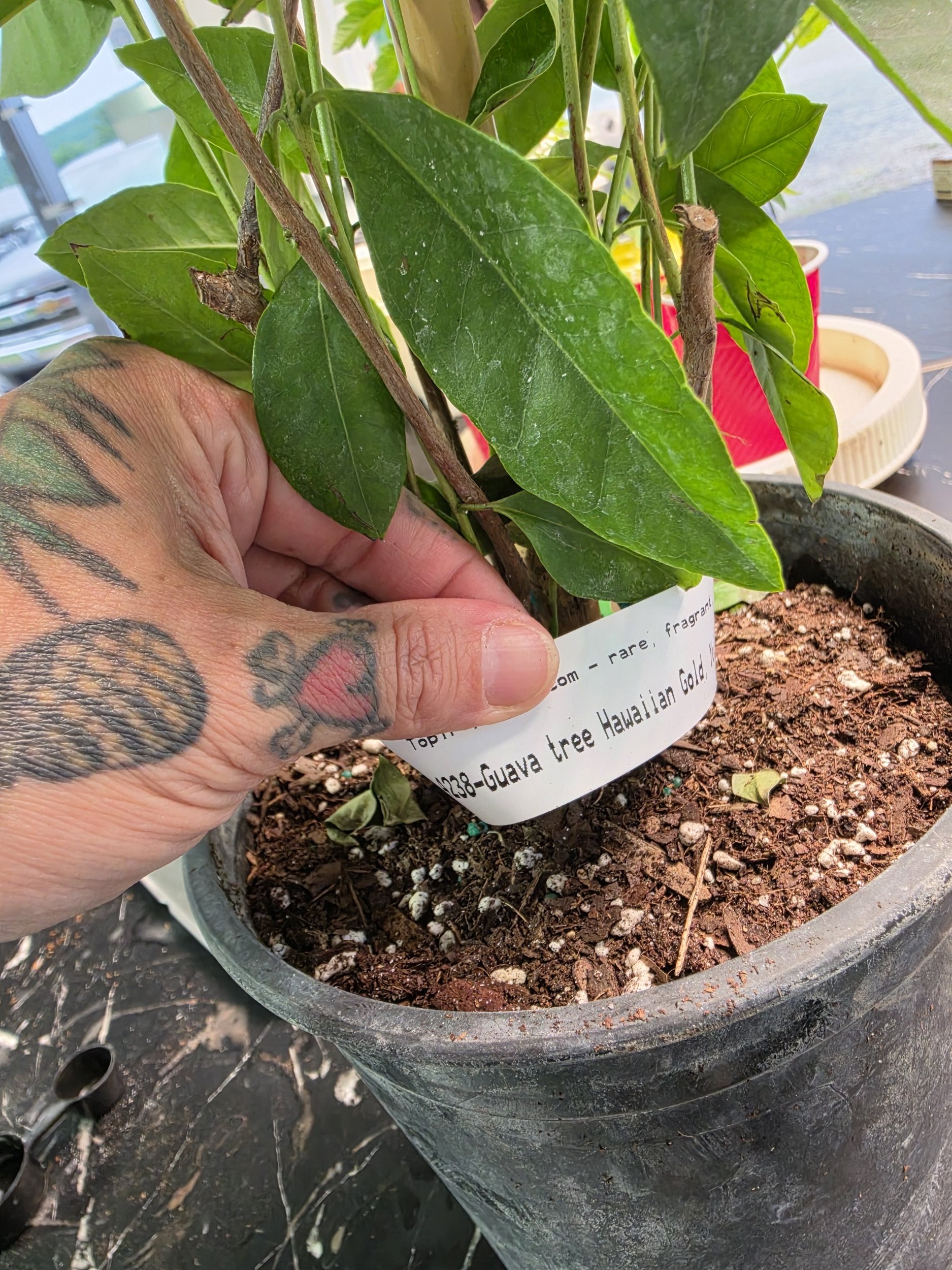
Hawaiian Gold Strawberry Guava
Hawaiian Gold Strawberry Guava
Overview Hawaiian Gold Strawberry Guava (Psidium cattleianum, golden or yellow variety) is a small tropical fruit tree prized for its vibrant golden-yellow fruits, sweet-tart flavor, and attractive evergreen foliage. It’s a vigorous grower that produces abundant fruit and makes an excellent specimen, hedge, or container plant in warm climates.
Flavor & Use
Fruit: 1–2 inches in diameter, golden-yellow skin, aromatic flesh that blends strawberry and guava notes.
Flavor profile: Sweet with a tangy acidity, floral perfume, and a pleasant balance—great fresh, in jams, jellies, syrups, and desserts.
Culinary uses: Eat fresh, add to fruit salads, make preserves, sauces, beverages, baked goods, or ferment for wine/liqueurs.
Growing Conditions
Climate: Best in USDA zones 9–11 (tropical/subtropical). Tolerates brief light frost but prefers warm, humid conditions.
Light: Full sun for best fruiting; will tolerate light shade but yields drop.
Soil: Prefers well-draining, slightly acidic to neutral soils (pH 5.5–7.0). Tolerant of a range of soils including sandy or loamy mixes; avoid waterlogged sites.
Water: Moderate water needs. Keep evenly moist during establishment and fruiting; drought-tolerant once established but will produce better with regular watering.
Fertilizer: Feed with a balanced, slow-release fertilizer or a fertilizer formulated for fruit trees 3–4 times per year. Include micronutrients (iron, manganese) if leaves yellow.
Spacing: Plant 8–15 feet apart depending on whether used as a hedge or specimen. Can be pruned to maintain smaller size.
Planting & Care
Planting: Dig a hole twice the root ball, set so the top of the root ball is level with ground, backfill with native soil amended with compost if desired.
Mulch: Apply 2–3 inches of organic mulch, keeping it away from the trunk to conserve moisture and suppress weeds.
Pruning: Prune to shape, remove dead wood, and open the canopy for light. It responds well to hedging and rejuvenation pruning; can be kept 6–10 ft tall with regular trimming.
Pests & Diseases: Relatively pest-tolerant but can attract fruit flies, scale, and mealybugs. Netting and sanitation (harvest promptly, remove fallen fruit) help control fruit flies. Root rot possible in poorly drained soils.
Propagation: Commonly propagated by seed (germinates readily) or by cuttings/grafting for named cultivars to maintain fruit quality.
Harvest & Storage
Harvest: Fruits ripen to a golden-yellow color and should be slightly soft to the touch. Ripening time varies with climate; in warm locations, multiple flushes per year are common.
Yield: Heavy bearing; a mature tree can produce large quantities.
Storage: Short shelf life (a few days to a week refrigerated). Best used soon after harvest or processed into preserves.
Landscape Benefits
Attractive evergreen foliage with bright fruits adds year-round interest.
Dense growth makes an effective privacy screen or informal hedge.
Wildlife-friendly: fruit attracts birds and pollinators.
Notes & Warnings
In some regions (including parts of Hawaii and Florida) strawberry guava is considered invasive because of its ability to naturalize and displace native plants. Check local regulations before planting and avoid planting where it may escape into wildlands.
If you want the named “Hawaiian Gold” cultivar, obtain plants from reputable nurseries to ensure true-to-type fruit characteristics.
Quick Care Summary
Zone: 9–11
Light: Full sun
Soil: Well-draining
Water: Moderate
Fertilizer: 3–4×/year balanced
Height: 8–20 ft (varies with pruning)
Fruit: Golden, strawberry-guava flavor, best fresh or preserved
Let me know if you want planting instructions tailored to pot culture, a fertilization schedule, or recipes using Hawaiian Gold Strawberry Guava.
Hawaiian Gold Strawberry Guava
Overview Hawaiian Gold Strawberry Guava (Psidium cattleianum, golden or yellow variety) is a small tropical fruit tree prized for its vibrant golden-yellow fruits, sweet-tart flavor, and attractive evergreen foliage. It’s a vigorous grower that produces abundant fruit and makes an excellent specimen, hedge, or container plant in warm climates.
Flavor & Use
Fruit: 1–2 inches in diameter, golden-yellow skin, aromatic flesh that blends strawberry and guava notes.
Flavor profile: Sweet with a tangy acidity, floral perfume, and a pleasant balance—great fresh, in jams, jellies, syrups, and desserts.
Culinary uses: Eat fresh, add to fruit salads, make preserves, sauces, beverages, baked goods, or ferment for wine/liqueurs.
Growing Conditions
Climate: Best in USDA zones 9–11 (tropical/subtropical). Tolerates brief light frost but prefers warm, humid conditions.
Light: Full sun for best fruiting; will tolerate light shade but yields drop.
Soil: Prefers well-draining, slightly acidic to neutral soils (pH 5.5–7.0). Tolerant of a range of soils including sandy or loamy mixes; avoid waterlogged sites.
Water: Moderate water needs. Keep evenly moist during establishment and fruiting; drought-tolerant once established but will produce better with regular watering.
Fertilizer: Feed with a balanced, slow-release fertilizer or a fertilizer formulated for fruit trees 3–4 times per year. Include micronutrients (iron, manganese) if leaves yellow.
Spacing: Plant 8–15 feet apart depending on whether used as a hedge or specimen. Can be pruned to maintain smaller size.
Planting & Care
Planting: Dig a hole twice the root ball, set so the top of the root ball is level with ground, backfill with native soil amended with compost if desired.
Mulch: Apply 2–3 inches of organic mulch, keeping it away from the trunk to conserve moisture and suppress weeds.
Pruning: Prune to shape, remove dead wood, and open the canopy for light. It responds well to hedging and rejuvenation pruning; can be kept 6–10 ft tall with regular trimming.
Pests & Diseases: Relatively pest-tolerant but can attract fruit flies, scale, and mealybugs. Netting and sanitation (harvest promptly, remove fallen fruit) help control fruit flies. Root rot possible in poorly drained soils.
Propagation: Commonly propagated by seed (germinates readily) or by cuttings/grafting for named cultivars to maintain fruit quality.
Harvest & Storage
Harvest: Fruits ripen to a golden-yellow color and should be slightly soft to the touch. Ripening time varies with climate; in warm locations, multiple flushes per year are common.
Yield: Heavy bearing; a mature tree can produce large quantities.
Storage: Short shelf life (a few days to a week refrigerated). Best used soon after harvest or processed into preserves.
Landscape Benefits
Attractive evergreen foliage with bright fruits adds year-round interest.
Dense growth makes an effective privacy screen or informal hedge.
Wildlife-friendly: fruit attracts birds and pollinators.
Notes & Warnings
In some regions (including parts of Hawaii and Florida) strawberry guava is considered invasive because of its ability to naturalize and displace native plants. Check local regulations before planting and avoid planting where it may escape into wildlands.
If you want the named “Hawaiian Gold” cultivar, obtain plants from reputable nurseries to ensure true-to-type fruit characteristics.
Quick Care Summary
Zone: 9–11
Light: Full sun
Soil: Well-draining
Water: Moderate
Fertilizer: 3–4×/year balanced
Height: 8–20 ft (varies with pruning)
Fruit: Golden, strawberry-guava flavor, best fresh or preserved
Let me know if you want planting instructions tailored to pot culture, a fertilization schedule, or recipes using Hawaiian Gold Strawberry Guava.