
 Image 1 of 1
Flashing lights strain
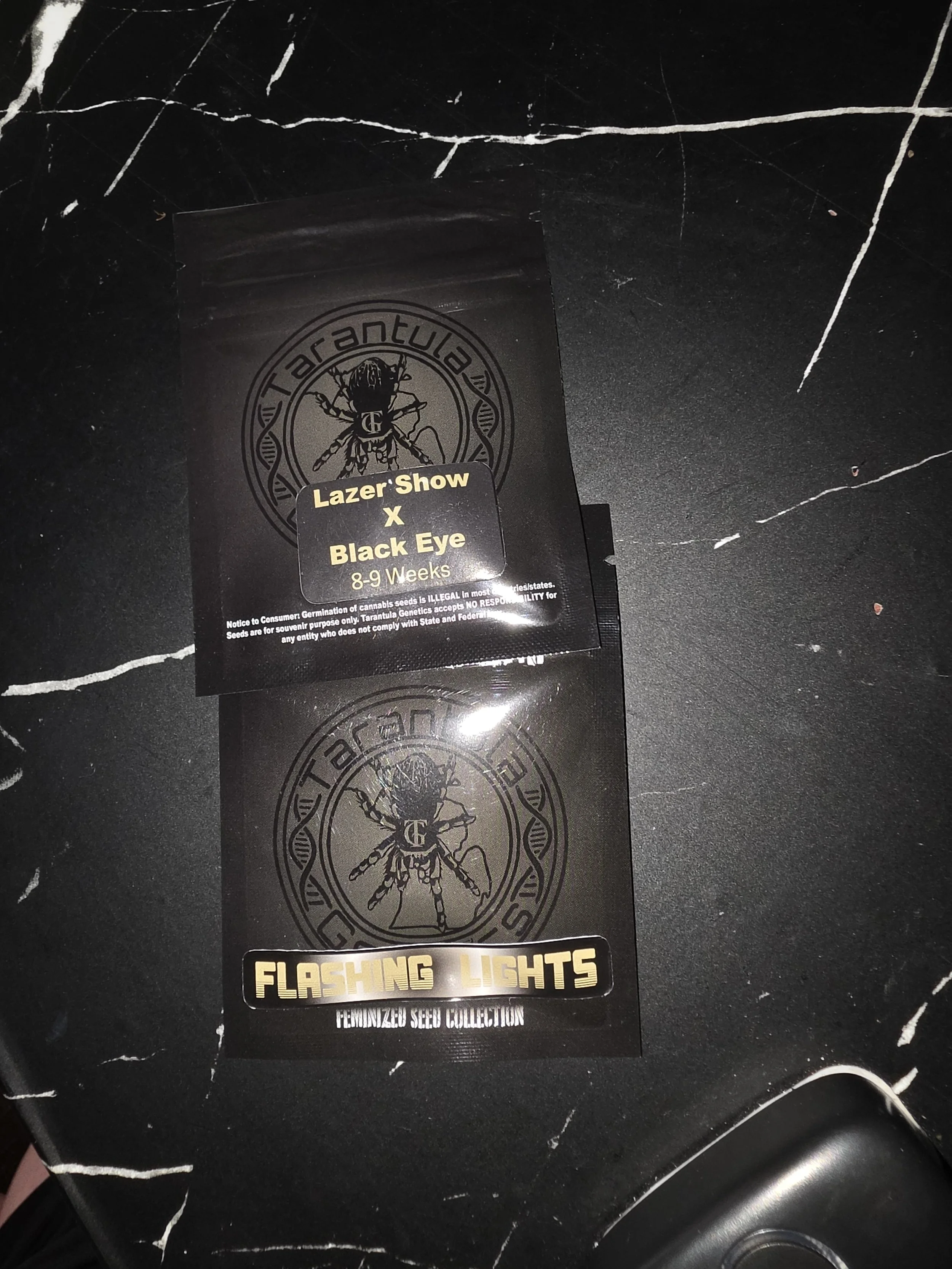
Flashing lights strain, tarantula genetics.
Flashing Lights—an evocative name that hints at high-energy phenotypes and vivid sensory effects—carries a lineage shaped by intentional crossings and phenotype selection. At Big D's Trees and Grow Supply, we look at strains like this through two lenses: the horticultural traits that matter to growers, and the genetics that shape the plant’s chemical and morphological profile.
Genetics and lineage
Parentage: Flashing Lights is typically bred from a Kush-dominant background crossed with genetics carrying strong terpene and cannabinoid expression. Common reported ancestors include Kush varieties and modern hybrids selected for resin production and stability.
Stability: Many Flashing Lights phenotypes lean towards indica-dominant structure—shorter, bushier plants with dense colas—but phenotypic variation can persist across breeders. Expect some phenos to show sativa stretch or differing terpene prominence depending on grow conditions and lineage selection.
Morphology and growth traits
Structure: Generally medium-to-short plants with sturdy branching. Dense internodes on indica-leaning pheno; some phenotypes will stretch more in early flowering.
Leaf type: Broad leaves on indica-dominant phenos; intermediate leaves on hybrids.
Flowering: Typical indoor flowering time ranges 8–10 weeks, with outdoor harvest in mid-to-late season depending on climate.
Yield: Moderate to high when grown with good canopy management (SCROG or LST), adequate nutrition, and proper environmental control.
Terpenes, aroma, and cannabinoid profile
Aroma: Common terpene profiles include diesel/pine notes with citrus or sweet undercurrents. “Flashing” phenos often show a bright, pungent nose—sharp top notes with resinous base.
Effects: Balanced to indica-leaning effects—relaxing body sensation with uplifting or euphoric cerebral overlay reported by many users.
Potency: Potency varies by phenotype and cultivation. Expect above-average THC in stabilized lines; some selections may emphasize CBD or minor cannabinoids depending on breeder goals.
Cultivation tips
Lighting: Moderate-to-high light intensity benefits resin production and compact bud development. Maintain consistent light cycles—12/12 for flowering indoors.
Nutrients: Start with balanced veg nutrients, then shift to bloom formulas with slightly reduced nitrogen and increased phosphorus and potassium. Watch for nutrient sensitivity and adjust fertilization based on runoff ppm and pH.
Training: Low-stress training (LST) and topping work well to open canopy and increase bud sites. SCROG or defoliation can improve light penetration for denser yields.
Environment: Keep humidity moderate—higher in veg (45–60%), lower in late flower (30–40%) to reduce mold risk in dense colas. Temperatures in the 70s–80s°F during lights-on, slightly cooler at night.
Pest and disease: Dense, resinous flowers are prone to mold if airflow is poor. Maintain good circulation, spot-check for pests, and flush media before harvest as needed.
Harvest and curing
Trichome monitoring: Harvest when trichomes show a mix of cloudy with some amber for balanced effects; more amber shifts toward sedative experience.
Drying/curing: Slow drying at 60–65°F and 50–60% humidity, then cure in airtight containers, burping daily for the first two weeks. Proper cure enhances terpene bouquet and smooths harshness.
Breeding and selection notes
Stability priorities: For commercial or seed-stock production, select for consistent flowering time, predictable morphology, and terpene stability across generations.
Crossing goals: Breeders often cross Flashing Lights phenos with high-resin or mold-resistant lines to preserve aroma while improving cultivation traits.
Phenohunting: Run multiple phenos under identical conditions to identify the most desirable combination of yield, aroma, potency, and structure.
If you want, we can recommend specific nutrients, light schedules, or pest-management plans tailored to your grow setup, or help source seeds/seedlings and supplies for cultivating Flashing Lights phenotypes.
Flashing lights strain, tarantula genetics.
Flashing Lights—an evocative name that hints at high-energy phenotypes and vivid sensory effects—carries a lineage shaped by intentional crossings and phenotype selection. At Big D's Trees and Grow Supply, we look at strains like this through two lenses: the horticultural traits that matter to growers, and the genetics that shape the plant’s chemical and morphological profile.
Genetics and lineage
Parentage: Flashing Lights is typically bred from a Kush-dominant background crossed with genetics carrying strong terpene and cannabinoid expression. Common reported ancestors include Kush varieties and modern hybrids selected for resin production and stability.
Stability: Many Flashing Lights phenotypes lean towards indica-dominant structure—shorter, bushier plants with dense colas—but phenotypic variation can persist across breeders. Expect some phenos to show sativa stretch or differing terpene prominence depending on grow conditions and lineage selection.
Morphology and growth traits
Structure: Generally medium-to-short plants with sturdy branching. Dense internodes on indica-leaning pheno; some phenotypes will stretch more in early flowering.
Leaf type: Broad leaves on indica-dominant phenos; intermediate leaves on hybrids.
Flowering: Typical indoor flowering time ranges 8–10 weeks, with outdoor harvest in mid-to-late season depending on climate.
Yield: Moderate to high when grown with good canopy management (SCROG or LST), adequate nutrition, and proper environmental control.
Terpenes, aroma, and cannabinoid profile
Aroma: Common terpene profiles include diesel/pine notes with citrus or sweet undercurrents. “Flashing” phenos often show a bright, pungent nose—sharp top notes with resinous base.
Effects: Balanced to indica-leaning effects—relaxing body sensation with uplifting or euphoric cerebral overlay reported by many users.
Potency: Potency varies by phenotype and cultivation. Expect above-average THC in stabilized lines; some selections may emphasize CBD or minor cannabinoids depending on breeder goals.
Cultivation tips
Lighting: Moderate-to-high light intensity benefits resin production and compact bud development. Maintain consistent light cycles—12/12 for flowering indoors.
Nutrients: Start with balanced veg nutrients, then shift to bloom formulas with slightly reduced nitrogen and increased phosphorus and potassium. Watch for nutrient sensitivity and adjust fertilization based on runoff ppm and pH.
Training: Low-stress training (LST) and topping work well to open canopy and increase bud sites. SCROG or defoliation can improve light penetration for denser yields.
Environment: Keep humidity moderate—higher in veg (45–60%), lower in late flower (30–40%) to reduce mold risk in dense colas. Temperatures in the 70s–80s°F during lights-on, slightly cooler at night.
Pest and disease: Dense, resinous flowers are prone to mold if airflow is poor. Maintain good circulation, spot-check for pests, and flush media before harvest as needed.
Harvest and curing
Trichome monitoring: Harvest when trichomes show a mix of cloudy with some amber for balanced effects; more amber shifts toward sedative experience.
Drying/curing: Slow drying at 60–65°F and 50–60% humidity, then cure in airtight containers, burping daily for the first two weeks. Proper cure enhances terpene bouquet and smooths harshness.
Breeding and selection notes
Stability priorities: For commercial or seed-stock production, select for consistent flowering time, predictable morphology, and terpene stability across generations.
Crossing goals: Breeders often cross Flashing Lights phenos with high-resin or mold-resistant lines to preserve aroma while improving cultivation traits.
Phenohunting: Run multiple phenos under identical conditions to identify the most desirable combination of yield, aroma, potency, and structure.
If you want, we can recommend specific nutrients, light schedules, or pest-management plans tailored to your grow setup, or help source seeds/seedlings and supplies for cultivating Flashing Lights phenotypes.