
 Image 1 of 1
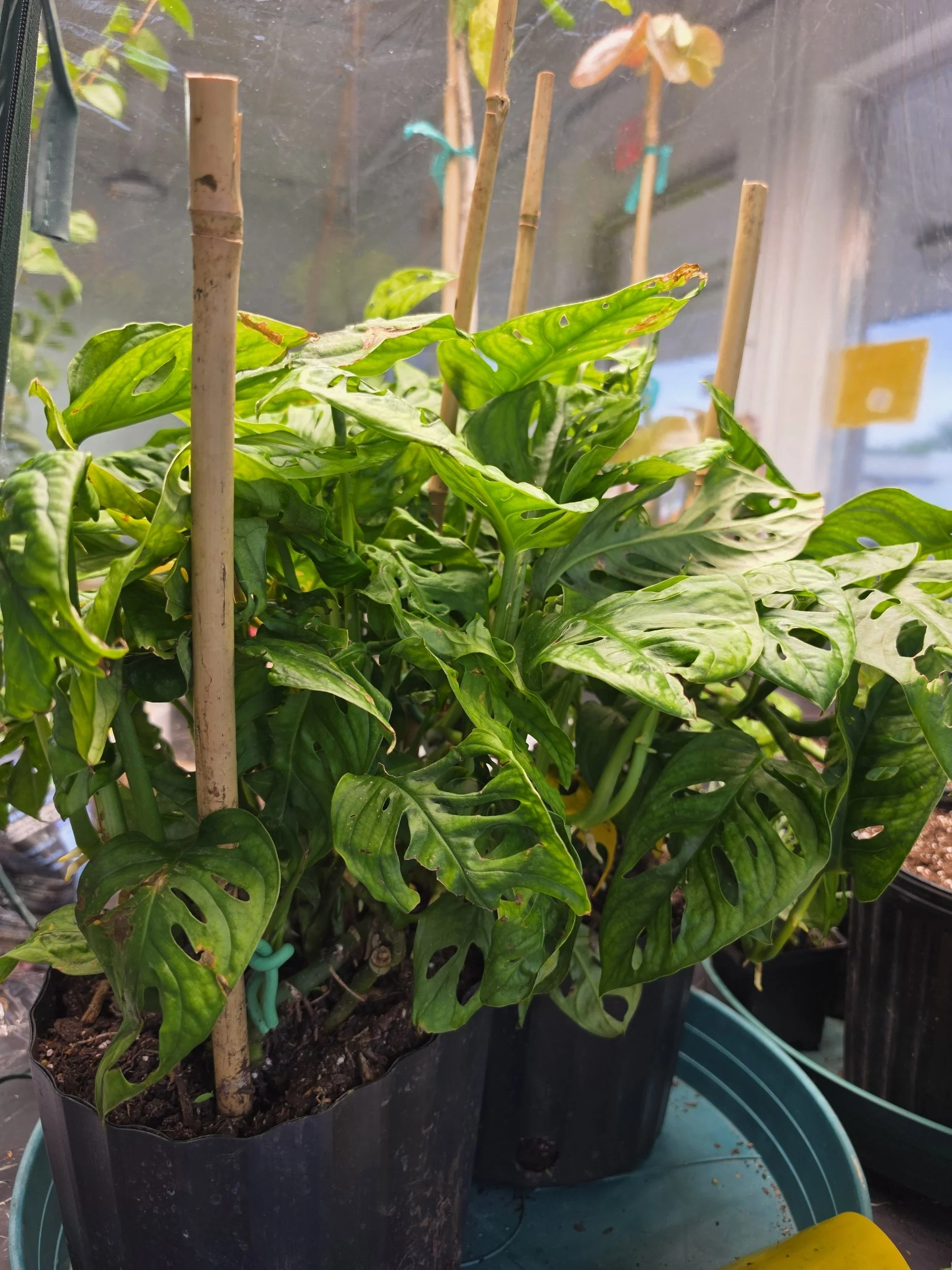
Monstera × adansonii
Common names: Swiss cheese vine, Swiss cheese plant, Adanson’s monstera
Plant type: Tropical evergreen vine (a Monstera hybrid)
Light: Bright, indirect light. Avoid direct midday sun—filtered sun is best.
Water: Water when the top 1–2 inches of soil are dry. Keep evenly moist but not waterlogged; allow slight drying between waterings.
Humidity: Prefers high humidity (60%+). Thrives with regular misting, pebble trays, or a humidifier.
Temperature: 65–85°F (18–29°C). Protect from drafts and temperatures below 55°F (13°C).
Soil: Loose, well-draining aroid mix—peat or coco coir + perlite + orchid bark. Good drainage is essential to avoid root rot.
Fertilizer: Balanced liquid fertilizer at half strength every 4–6 weeks during the growing season (spring–summer). Reduce feeding in fall–winter.
Support: A trellis, moss pole, or hanging basket works depending on desired growth habit. This vine will climb and develop larger leaves and more fenestrations when given support.
Pruning: Trim to control size, encourage bushier growth, and remove yellow or damaged leaves. Take cuttings for propagation.
Propagation: Easy by stem cuttings in water or directly in soil. Include at least one node and preferably an aerial root. Rooting in water can take 2–6 weeks; transplant to soil once roots are an inch or two long.
Pests & problems: Watch for spider mites, mealybugs, scale, and fungus gnats. Yellowing leaves can indicate overwatering; brown crispy edges often mean low humidity or underwatering. Leggy growth suggests insufficient light.
Toxicity: Toxic to pets and humans if ingested—contains calcium oxalate crystals. Keep out of reach of children and pets.
Design tips: Great in hanging baskets where its trailing habit shines, or trained up a pole for larger, perforated leaves. Pair with other tropicals like philodendrons, pothos, and ferns for a jungle look.
Fun fact: This plant’s dramatic leaf perforations (fenestrations) develop more when climbing and in higher light—give it something to climb and it’ll show off.
Monstera × adansonii
Common names: Swiss cheese vine, Swiss cheese plant, Adanson’s monstera
Plant type: Tropical evergreen vine (a Monstera hybrid)
Light: Bright, indirect light. Avoid direct midday sun—filtered sun is best.
Water: Water when the top 1–2 inches of soil are dry. Keep evenly moist but not waterlogged; allow slight drying between waterings.
Humidity: Prefers high humidity (60%+). Thrives with regular misting, pebble trays, or a humidifier.
Temperature: 65–85°F (18–29°C). Protect from drafts and temperatures below 55°F (13°C).
Soil: Loose, well-draining aroid mix—peat or coco coir + perlite + orchid bark. Good drainage is essential to avoid root rot.
Fertilizer: Balanced liquid fertilizer at half strength every 4–6 weeks during the growing season (spring–summer). Reduce feeding in fall–winter.
Support: A trellis, moss pole, or hanging basket works depending on desired growth habit. This vine will climb and develop larger leaves and more fenestrations when given support.
Pruning: Trim to control size, encourage bushier growth, and remove yellow or damaged leaves. Take cuttings for propagation.
Propagation: Easy by stem cuttings in water or directly in soil. Include at least one node and preferably an aerial root. Rooting in water can take 2–6 weeks; transplant to soil once roots are an inch or two long.
Pests & problems: Watch for spider mites, mealybugs, scale, and fungus gnats. Yellowing leaves can indicate overwatering; brown crispy edges often mean low humidity or underwatering. Leggy growth suggests insufficient light.
Toxicity: Toxic to pets and humans if ingested—contains calcium oxalate crystals. Keep out of reach of children and pets.
Design tips: Great in hanging baskets where its trailing habit shines, or trained up a pole for larger, perforated leaves. Pair with other tropicals like philodendrons, pothos, and ferns for a jungle look.
Fun fact: This plant’s dramatic leaf perforations (fenestrations) develop more when climbing and in higher light—give it something to climb and it’ll show off.