
 Image 1 of 1
Arabica Coffee Tree
Arabica Coffee Tree
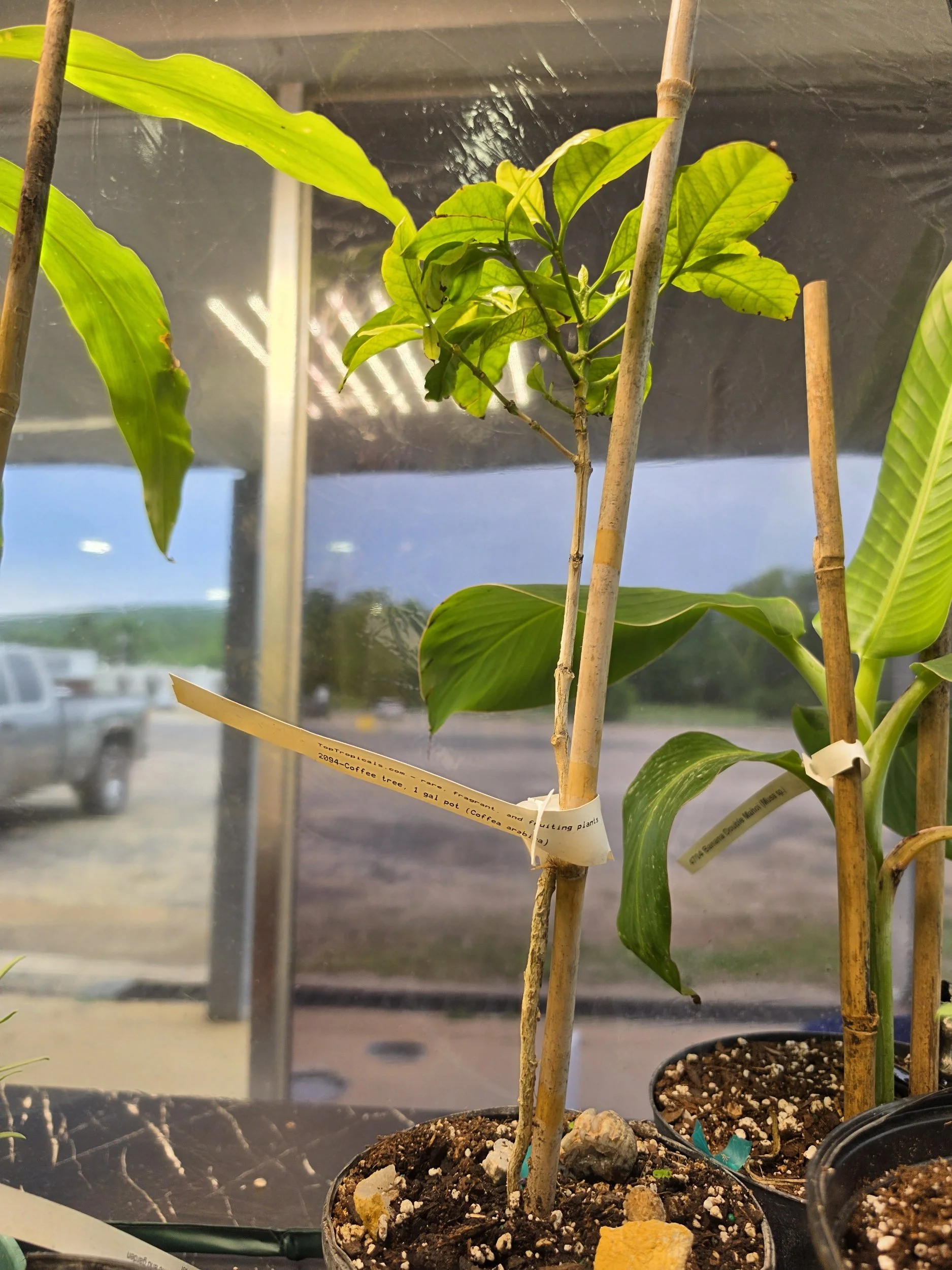
Overview The Arabica coffee tree (Coffea arabica) is the most widely cultivated coffee species, prized for its smooth, nuanced flavor and aromatic complexity. Native to the highlands of Ethiopia, it thrives at higher elevations and cooler temperatures than its hardier cousin, Robusta. Arabica produces the majority of the world’s specialty coffee beans.
Appearance & Growth Habit
Size: Typically 6–15 feet (1.8–4.5 m) tall in cultivation, though left unpruned plants can reach larger sizes. Many growers maintain a shorter shrub form for easier harvesting.
Leaves: Glossy, dark green, elliptical leaves about 4–12 inches long.
Flowers: Small, white, fragrant, star-shaped blossoms that appear in clusters and bloom after rains.
Fruit (cherries): Initially green, ripening to yellow, orange, or deep red depending on variety. Each cherry usually contains two coffee seeds (beans).
Climate & Site Requirements
Elevation: Best grown between 2,000–6,000 feet (600–1,800 m) above sea level; higher elevations often yield more desirable acidity and complexity in flavor.
Temperature: Optimal range 60–75°F (15–24°C). Arabica is sensitive to frost and extreme heat.
Rainfall: Requires consistent moisture—about 40–100 inches (1,000–2,500 mm) annually—preferably with a distinct wet and dry season for proper flowering and fruit development.
Light: Prefers filtered sunlight or partial shade. Full sun can stress plants in hotter climates; many producers use shade trees.
Soil: Deep, well-drained, slightly acidic soils (pH 6–6.5) rich in organic matter.
Planting & Care
Propagation: Commonly grown from seeds (freshly harvested seeds germinate best) or grafting/clonal cuttings for desirable cultivars.
Spacing: Typically 4–6 feet between plants in rows spaced 8–10 feet apart, but spacing varies with pruning system and farm layout.
Watering: Keep soil evenly moist but not waterlogged. Drip irrigation or regular watering during dry periods helps maintain consistent fruit set.
Fertilization: Regular, balanced feedings with emphasis on nitrogen, potassium, and micronutrients. Organic matter and compost benefit soil structure and microbial health.
Pruning: Annual pruning helps maintain shrub shape, improve air circulation, and stimulate new productive growth. Remove dead wood and thin interior branches.
Shade management: If grown under shade, manage canopy to provide 30–50% shade depending on local climate and desired bean characteristics.
Pests & Diseases
Common pests: Coffee berry borer, green scale, leaf miners, aphids.
Common diseases: Coffee leaf rust (Hemileia vastatrix), coffee berry disease (Colletotrichum), root rot in poorly drained soils.
Management: Integrated pest management—monitoring, cultural controls (sanitation, resistant varieties), biological controls, and targeted chemical treatments when necessary.
Harvesting & Processing
Harvest: Cherries are typically picked by hand when ripe to ensure quality—either selectively (multiple passes) or by stripping (faster, lower quality).
Processing methods: Washed (wet), natural (dry), and honey (semi-washed) processes, each influencing the final cup profile.
Drying & Storage: Proper drying to safe moisture levels (about 10–12%) and careful storage are essential to preserve flavor and avoid mold.
Varieties & Flavor
Key cultivars: Typica, Bourbon, Caturra, Catuai, SL28, Gesha (Geisha), and many more. Each has distinct growth traits, yield, disease resistance, and cup characteristics.
Flavor profile: Typically sweeter, brighter acidity, complex fragrance, and a wide range from floral and fruity to chocolatey and nutty, depending on variety, terroir, and processing.
Use & Value
Arabica beans produce higher-quality specialty coffee and command premium prices compared to Robusta. They are preferred for espresso and high-end filter coffees.
Troubleshooting Tips
Yellowing leaves: Could indicate nutrient deficiency (nitrogen, magnesium) or overwatering—test soil and adjust fertilization/watering.
Poor flowering/fruit set: Insufficient rainfall or irregular watering, inadequate sunlight, or nutrient imbalance.
Slow growth or stunting: Check for root rot from poor drainage, compacted soil, or nematode/pest issues.
Fun Fact The Arabica plant was once a wild understory tree in Ethiopian forests. Now it powers mornings worldwide—one delightful sip at a time.
Whether you’re growing a backyard specimen or managing a small specialty plot, Arabica rewards careful site selection
Arabica Coffee Tree
Overview The Arabica coffee tree (Coffea arabica) is the most widely cultivated coffee species, prized for its smooth, nuanced flavor and aromatic complexity. Native to the highlands of Ethiopia, it thrives at higher elevations and cooler temperatures than its hardier cousin, Robusta. Arabica produces the majority of the world’s specialty coffee beans.
Appearance & Growth Habit
Size: Typically 6–15 feet (1.8–4.5 m) tall in cultivation, though left unpruned plants can reach larger sizes. Many growers maintain a shorter shrub form for easier harvesting.
Leaves: Glossy, dark green, elliptical leaves about 4–12 inches long.
Flowers: Small, white, fragrant, star-shaped blossoms that appear in clusters and bloom after rains.
Fruit (cherries): Initially green, ripening to yellow, orange, or deep red depending on variety. Each cherry usually contains two coffee seeds (beans).
Climate & Site Requirements
Elevation: Best grown between 2,000–6,000 feet (600–1,800 m) above sea level; higher elevations often yield more desirable acidity and complexity in flavor.
Temperature: Optimal range 60–75°F (15–24°C). Arabica is sensitive to frost and extreme heat.
Rainfall: Requires consistent moisture—about 40–100 inches (1,000–2,500 mm) annually—preferably with a distinct wet and dry season for proper flowering and fruit development.
Light: Prefers filtered sunlight or partial shade. Full sun can stress plants in hotter climates; many producers use shade trees.
Soil: Deep, well-drained, slightly acidic soils (pH 6–6.5) rich in organic matter.
Planting & Care
Propagation: Commonly grown from seeds (freshly harvested seeds germinate best) or grafting/clonal cuttings for desirable cultivars.
Spacing: Typically 4–6 feet between plants in rows spaced 8–10 feet apart, but spacing varies with pruning system and farm layout.
Watering: Keep soil evenly moist but not waterlogged. Drip irrigation or regular watering during dry periods helps maintain consistent fruit set.
Fertilization: Regular, balanced feedings with emphasis on nitrogen, potassium, and micronutrients. Organic matter and compost benefit soil structure and microbial health.
Pruning: Annual pruning helps maintain shrub shape, improve air circulation, and stimulate new productive growth. Remove dead wood and thin interior branches.
Shade management: If grown under shade, manage canopy to provide 30–50% shade depending on local climate and desired bean characteristics.
Pests & Diseases
Common pests: Coffee berry borer, green scale, leaf miners, aphids.
Common diseases: Coffee leaf rust (Hemileia vastatrix), coffee berry disease (Colletotrichum), root rot in poorly drained soils.
Management: Integrated pest management—monitoring, cultural controls (sanitation, resistant varieties), biological controls, and targeted chemical treatments when necessary.
Harvesting & Processing
Harvest: Cherries are typically picked by hand when ripe to ensure quality—either selectively (multiple passes) or by stripping (faster, lower quality).
Processing methods: Washed (wet), natural (dry), and honey (semi-washed) processes, each influencing the final cup profile.
Drying & Storage: Proper drying to safe moisture levels (about 10–12%) and careful storage are essential to preserve flavor and avoid mold.
Varieties & Flavor
Key cultivars: Typica, Bourbon, Caturra, Catuai, SL28, Gesha (Geisha), and many more. Each has distinct growth traits, yield, disease resistance, and cup characteristics.
Flavor profile: Typically sweeter, brighter acidity, complex fragrance, and a wide range from floral and fruity to chocolatey and nutty, depending on variety, terroir, and processing.
Use & Value
Arabica beans produce higher-quality specialty coffee and command premium prices compared to Robusta. They are preferred for espresso and high-end filter coffees.
Troubleshooting Tips
Yellowing leaves: Could indicate nutrient deficiency (nitrogen, magnesium) or overwatering—test soil and adjust fertilization/watering.
Poor flowering/fruit set: Insufficient rainfall or irregular watering, inadequate sunlight, or nutrient imbalance.
Slow growth or stunting: Check for root rot from poor drainage, compacted soil, or nematode/pest issues.
Fun Fact The Arabica plant was once a wild understory tree in Ethiopian forests. Now it powers mornings worldwide—one delightful sip at a time.
Whether you’re growing a backyard specimen or managing a small specialty plot, Arabica rewards careful site selection